The Crown Chakra
Sahasrara and the gateway to the infinite
The crown chakra, known in Sanskrit as Sahasrara, is the seventh and final energy centre in the seven-chakra system. Located at the top of the head, it is the point where the individual meets the infinite. Sahasrara means "thousand-petaled" · a lotus of limitless expansion, depicted in the yogic tradition with one thousand petals to represent what cannot be counted, what exceeds every frame. The Paduka Panchaka, an anonymous text that Woodroffe translated alongside Purnananda's, describes detailed meditation practices within Sahasrara itself · the practice of resting in what has no boundary.
Unlike every other chakra, the crown does not "govern" in the usual sense. The root governs survival. The heart governs love. The throat governs expression. But the crown does not control a domain · it is the point where all domains dissolve into unity. It is associated with the element of pure consciousness (beyond the five physical elements entirely), the colour violet or white, and the pineal gland. Its bija mantra is OM, dissolving into silence · because at the crown, even the most sacred sound gives way to what cannot be spoken.
In Caroline Myss's developmental framework from Anatomy of the Spirit, the crown corresponds to the capacity to live fully in the present moment, to trust the divine without needing to understand it, and to release the need for control. This is the centre where kundalini · the ascending Shakti · reunites with Shiva at the crown. The individual soul remembers its unity with the universal. Every other chakra was preparation. This guide explores the crown chakra in depth: what it represents, how blockage and overactivity manifest, the practices that support its opening, and the cross-tradition connections that reveal how every contemplative lineage points toward the same summit.
In Brief
- - Sanskrit: Sahasrara · Element: Pure Consciousness · Colour: Violet / White · Bija mantra: OM / Silence
- - Location: Top of the head (crown) · Gland: Pineal
- - Governs: Spiritual connection, unity consciousness, transcendence, divine awareness
- - Tarot: The Sun (XIX) · Kabbalah: Keter (Crown) · Crystals: Clear Quartz, Selenite
What the Crown Chakra Governs
The crown chakra's territory is not a territory at all. It is the dissolving of territory · the moment when the boundaries that separate "this" from "that," "self" from "other," "here" from "there" begin to thin. Many contemplative traditions have a name for what happens at the crown: samadhi in yoga, satori in Zen, unio mystica in Christian contemplation, fana in Sufism. The words differ, and scholars debate whether these terms describe identical states or merely adjacent ones. But the direction they point toward is remarkably consistent.
Physical domain: The crown is associated with the pineal gland (which regulates melatonin and circadian rhythms · Descartes called it "the seat of the soul"), the central nervous system, and the cerebral cortex. Its physical associations are the least specific of any chakra, because its domain is not a body system but the awareness that observes all body systems. When the crown functions well, the nervous system is calm, sleep is restorative, and the body feels transparent to awareness rather than opaque.
Spiritual domain: The sense of connection to something greater than the self. Mystical experience. The dissolution of the ego-boundary while awareness remains clear. The capacity to be fully present without striving, to feel at home in existence without needing existence to be anything other than what it is. The crown does not add anything to consciousness. It removes the filters that make consciousness feel limited.
The marriage at the summit: In the yogic tradition, the crown is where kundalini (ascending Shakti) reunites with Shiva · where the individual energy that has been rising through the chakras since the root finally meets the universal consciousness that was waiting at the top. This is described as a marriage: the divine feminine (energy, movement, creation) merging with the divine masculine (awareness, stillness, being). Every chakra below the crown prepared for this meeting. The root gave ground. The sacral gave desire. The solar plexus gave will. The heart gave love. The throat gave voice. The third eye gave vision. The crown gives union.
Signs of Blockage
A blocked crown chakra manifests not as a physical illness in the usual sense but as a fundamental disconnection from meaning, purpose, and the sense that existence is worth inhabiting.
Physical signs traditionally associated with this centre:
- Chronic fatigue without a clear physical cause · a weariness that rest does not resolve
- Sensitivity to light and sound · the nervous system overwhelmed by ordinary stimuli
- Crown-area headaches, described by practitioners as distinct from the frontal headaches associated with the third eye
- Disrupted sleep cycles · linked in this framework to the pineal gland's rhythms
- A sensation of pressure or heaviness at the top of the head
These associations come from practitioner traditions rather than clinical research. Persistent physical symptoms should always be evaluated medically.
Spiritual and emotional signs:
- Spiritual disconnection or apathy · "none of this matters," "there's nothing beyond what I can see"
- Rigid materialism · refusing to acknowledge any dimension beyond the physical, not from inquiry but from fear
- Rigid religious belief · clinging to dogma as a substitute for direct experience
- Depression with an existential quality · "what's the point?" as a chronic inner state
- Inability to feel wonder, awe, or reverence · even in the presence of beauty
- Feeling cut off from meaning · going through the motions of a life that feels hollow
- Chronic cynicism · the defensive posture of someone who has given up on transcendence
Crown blockage is particularly common in people who have experienced spiritual betrayal · the loss of faith through hypocrisy, abuse, or the collapse of a belief system that once provided meaning. The crown that should be open to the infinite has sealed shut against it, because openness once led to devastation.
Signs of Overactivity
An overactive crown chakra is perhaps the most dangerous imbalance in the entire system, because it can mimic spiritual attainment while producing profound dysfunction.
- Spiritual bypassing at its most extreme · using spiritual experience to avoid dealing with human reality
- Dissociation from the body, from relationships, from ordinary life · "I am beyond all that"
- Spiritual addiction · chasing peak experiences, attending retreat after retreat, collecting initiations without integrating any of them
- Grandiosity and messiah complex · believing oneself specially chosen, uniquely enlightened, beyond the rules
- Disconnection from practical concerns · bills unpaid, health neglected, relationships abandoned in favour of "higher" pursuits
- In extreme cases, psychosis-adjacent states · the boundary between mystical experience and mental illness requires careful discernment and often professional support
Crown overactivity almost always coexists with severe root chakra deficiency. The system is top-heavy · all sky and no ground. The traditional remedy is emphatic: before opening the crown further, strengthen the root. Plant your feet on the earth before you try to dissolve into the heavens. Every authentic contemplative tradition teaches this, and every tradition has cautionary tales about what happens when it is ignored.
Healing Techniques for the Crown Chakra
Meditation
Silent meditation is the crown chakra's primary practice. Not mantra, not visualisation, not technique · pure sitting. The practice of letting go of effort IS the crown practice. OM can be used as an entry point, chanted three times and then released into silence, allowing the vibration to dissolve. If you're drawn to explore which of the seven centres is calling you most strongly right now, our free Tarot chakra quiz is a gentle three-minute starting point. Vipassana, zazen, centering prayer, contemplative meditation of any tradition · all point toward the same territory. The crown opens not through addition but through subtraction · removing what stands between awareness and its own nature.
Yoga Poses
- Headstand (Sirsasana): Called the "king of asanas," it brings energy directly to the crown. Approach only with proper training and a strong foundation in other inversions.
- Savasana (Corpse Pose): The most underrated pose in yoga · the practice of conscious surrender, of letting the body become completely still while awareness remains. Savasana is a rehearsal for the crown's ultimate teaching: the dissolution of doing while being continues.
- Lotus Pose (Padmasana): The traditional meditation posture. Rooted through the base, the spine rises naturally, and the crown orients upward without effort.
- Tree Pose (Vrksasana): Rooted below, reaching above. The body becomes the bridge between earth and sky that the entire chakra system describes.
Crystals
Clear Quartz is the primary crown chakra stone · the "master healer," transparent and programmable, amplifying whatever intention it is given. It is pure potential, like the crown itself. Selenite, named for Selene (the Moon), is white and luminous, associated with higher guidance and angelic awareness. It never needs cleansing because it does not absorb negative energy · it simply transmits light. Howlite calms the mind and aids connection to higher consciousness, supporting the stillness that crown meditation requires. Our complete crystal-chakra guide covers selection, cleansing, and a full crystal-on-body meditation practice.
Sound
OM, dissolving into silence. In modern sound healing, the Solfeggio frequency 963 Hz is often linked to the crown, though these specific frequency assignments are a contemporary framework. The Tibetan singing bowl's overtones · the way a single strike produces multiple frequencies that gradually merge into silence · is perhaps the best auditory metaphor for the crown: multiplicity resolving into unity, sound returning to stillness. Ultimately, silence itself is the sound of Sahasrara.
Embodied Practices
- Being in nature without agenda · not hiking, not exercising, simply being present with what is
- Fasting or simplified eating · reducing sensory input, making space for awareness
- Service to others without expectation of return · the natural expression of a heart that has moved past self-concern
- Prayer · in any tradition, in any form, as the honest turning of attention toward what exceeds understanding
- Study of sacred texts from any tradition · not for information but for the shift in consciousness that contemplative reading produces
- Watching the sunrise or sunset with full, undivided attention
- Contemplating death · not morbidly, but as the spiritual practice that every tradition recommends for cutting through triviality
Tarot Correspondences
A note on two maps. The correspondences that follow use the planetary system, which seats The Sun at the crown, through the Sun itself. Philip Carr-Gomm and Steve Hounsome's The Energy Body in Tarot teaches a different arrangement · the Three Septenaries, a 7x3 grid that gives every numbered Major Arcana card both a chakra and a realm of Body, Mind or Spirit. There The Sun belongs to the throat at the level of Spirit, and the crown is held by The Chariot, Temperance and The World. Both are working maps rather than doctrine, and the one worth keeping is the one that opens the cards for you.
In the planetary correspondence system, the crown chakra is associated with the Sun and its Major Arcana card, The Sun (XIX). The Sun card represents radiant, unconditional awareness · the light that illuminates everything equally, without preference or judgment. A child rides joyfully on a white horse, arms open, sunflowers blooming. This is not naivety. It is the joy that arises when the ego's constrictions fall away and awareness simply shines, the way the sun shines · not for a reason, not toward a goal, but because shining is its nature.
The completion of the Fool's Journey is the crown's story told through the Major Arcana. The Fool (0) begins as pure, undifferentiated potential · consciousness stepping off the cliff into incarnation. The journey through the twenty-one Major Arcana is the journey through embodiment, through the chakras, through the full range of human experience. The World (XXI) at the root represents full embodiment · the soul fully incarnate. The Sun (XIX) at the crown represents the consciousness that shines through that embodiment. The journey is circular: the Fool returns to where it began, but now it knows where it has been.
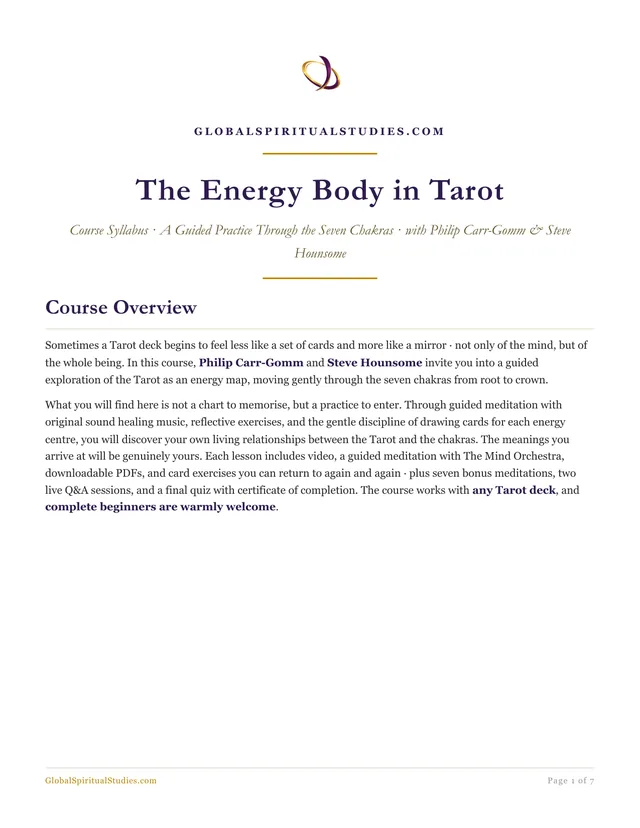
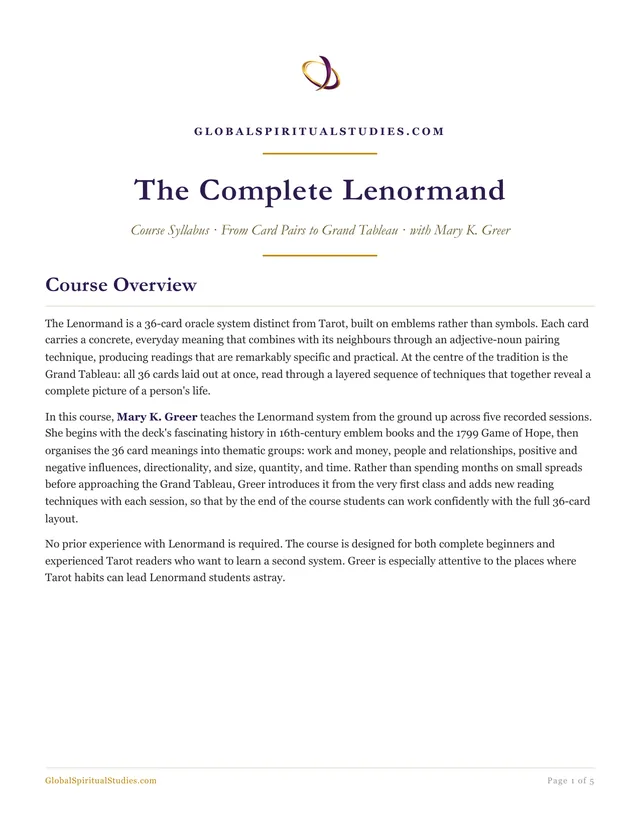
This circular journey is central to Philip Carr-Gomm and Steve Hounsome's teaching in The Energy Body in Tarot. Carr-Gomm · former Chief of the Order of Bards, Ovates and Druids, and author of over twenty books on Druidry and esoteric tradition · brings decades of cross-tradition scholarship to the question of how the Major Arcana map onto the energy body. The course follows the full ascent from root to crown, and the crown lesson explores what happens when the Tarot journey reaches its summit.
The Major Arcana as a whole belong to the crown's domain. They represent archetypal forces that transcend the elemental world of the Minor Arcana · and the crown is the centre that transcends the elemental world of the lower chakras. In a Tarot chakra spread, cards at the crown position carry messages about the soul's deepest direction and its relationship with the sacred.
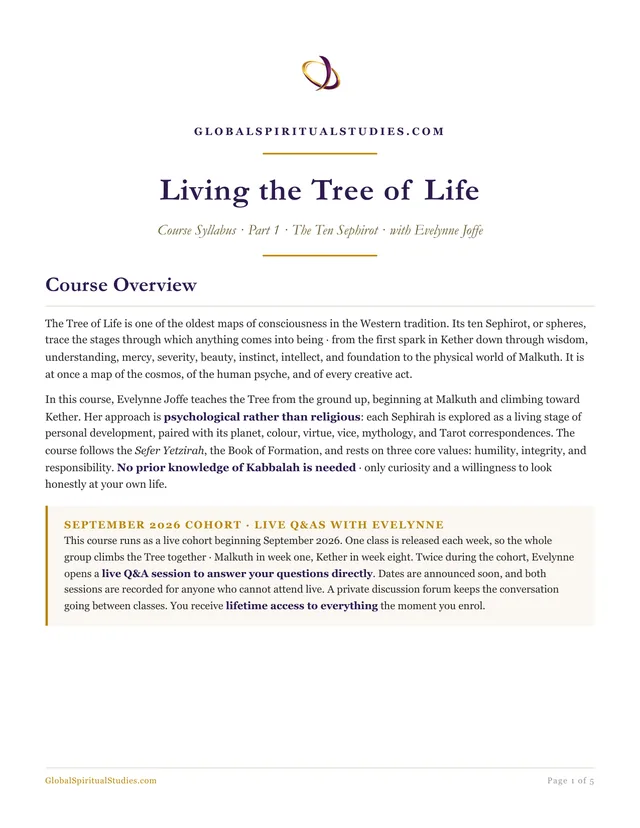
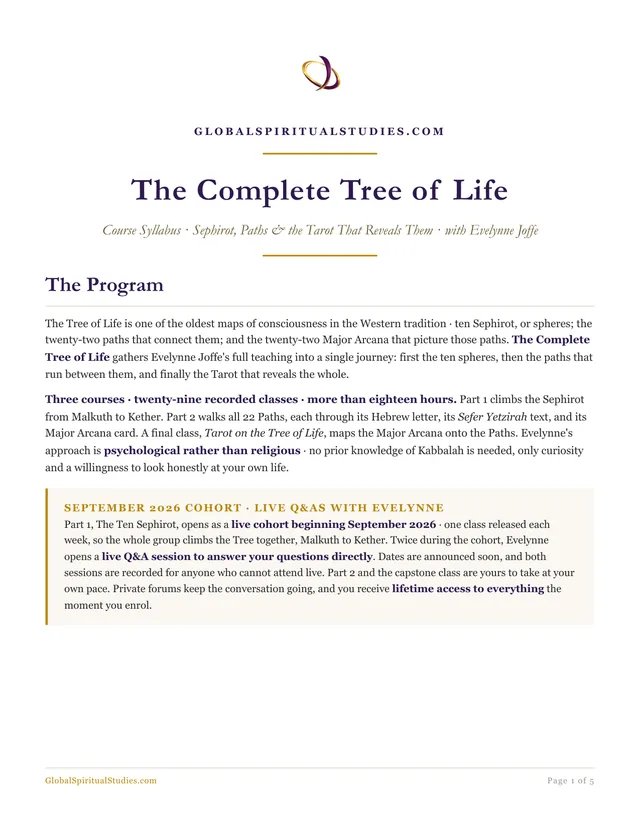
The Kabbalah Parallel · Keter
Keter (Crown) is the first and highest sephirah on the Tree of Life, and it is the most direct name-to-name correspondence in the entire chakra-sephirot system. Crown to Crown. The names are identical. No other pairing is this explicit.
Keter is called the "Ancient of Days," the "Concealed of the Concealed." It is the first emanation from Ein Sof (the Infinite, the Unknowable) · the point where the unmanifest becomes manifest, where nothing becomes something, where the divine first stirs toward creation. It is not a thing one can describe, because the moment it is described it has already become Chokmah (Wisdom, the second sephirah). Keter is before thought, before distinction, before the first word.
In Kabbalistic practice, one does not meditate ON Keter · one meditates INTO it. The journey from Malkuth (root) to Keter (crown) is the same ascending path as kundalini rising from Muladhara to Sahasrara. Both traditions teach that the journey culminates in dissolution: the individual self does not arrive at God; it remembers that it was never separate.
The Shekhinah (divine feminine, dwelling at Malkuth) ascends to reunite with Ein Sof (at or beyond Keter), just as Shakti rises to merge with Shiva at Sahasrara. The gendered language differs. The direction differs slightly · Kabbalah emphasises the divine descending into matter as much as the soul ascending toward the divine. But both systems describe a single axis connecting earth to heaven, body to spirit, individual to universal. The crown is where the separation ends.
Cross-Cultural Perspectives
The crown's territory appears across Hindu, Buddhist, Christian, Taoist, and Sufi traditions, though none of them describe it in quite the same way · which may itself be a teaching about the crown's nature. What exceeds the mind resists capture by any single description.
Tibetan Buddhism calls the crown the Chakra of Divine Bliss, but assigns it thirty-two spokes rather than the Hindu system's thousand petals. In Vajrayana practice, the crown is where the white bindu (drop) resides, representing the pure essence inherited from the father. During death or advanced meditation, the white bindu descends from the crown and the red bindu (from the mother, at the navel) ascends; they dissolve together at the heart. This means the Tibetan system treats the crown not only as a destination but as a point of departure · the beginning of a descent that finds its resolution at the heart.
Taoist tradition describes the crown's territory through the concept of "returning Shen to the Void" (fan shen huan xu) · the final stage of internal alchemy, where the most refined form of consciousness (Shen, spirit) dissolves back into the undifferentiated source from which it came. The Taoist Immortal Fetus · the spiritual body cultivated through decades of practice · is said to emerge from the crown of the head at the moment of death, carrying awareness beyond the dissolution of the physical body.
Christian mysticism has its own crown iconography. The halo in Christian art is literally a depiction of the open crown chakra · radiant light emanating from the head of a saint. St. John of the Cross's "dark night of the soul" describes the crown's territory with unflinching honesty: before union with the divine, everything known must be stripped away. The crown does not open into light without first passing through darkness. The "crown of thorns" has been interpreted mystically as the crown chakra under duress · spiritual awakening through suffering rather than ecstasy.
Sufi tradition describes the crown's experience as fana (annihilation of the self in God). The Sufi does not seek to know God but to dissolve the knower. "Die before you die," the Prophet Muhammad reportedly said · meaning, let the ego dissolve while the body still lives. This is the crown's teaching in its most direct form: transcendence is not an achievement of the self but the self's graceful disappearance into what was always already here.
Guided Crown Chakra Practice
This is the simplest and most difficult practice in the series. It asks you to do nothing.
- Sit comfortably. You may lie down for this practice if you prefer. Close your eyes.
- Take three deep breaths, then release control of the breath entirely. Let it breathe itself.
- Bring your attention to the very top of your head. You may feel a slight tingling, warmth, or a sense of openness there. If you feel nothing, that is fine.
- If using a mantra: chant OM three times, slowly, letting each OM dissolve into a longer silence. After the third, release the mantra entirely.
- Sit in silence. Do not visualise. Do not direct the energy. Do not try to achieve anything.
- If thoughts arise, let them pass without engaging. If sensations arise, let them be. If emotions arise, let them move through. You are not meditating on something · you are simply being.
- If the mind becomes very active, bring your attention gently back to the crown of the head. Not forcefully · like returning your gaze to a candle flame without frustration.
- Sit for five to seven minutes. This may feel like a very long time or no time at all. Both are fine.
- When you are ready to close, bring your attention slowly downward through the body: from crown to brow, to throat, to heart, to solar plexus, to sacral, to root. Feel each centre in turn. This descent is not optional.
- Open your eyes. Touch the ground with your hands. Drink water. Feel your feet on the floor. Return to the body completely.
The downward return is essential. Crown chakra practice without grounding afterward can leave you spacey, dissociated, or emotionally vulnerable. Always close with root awareness. If you work with crystals, place Clear Quartz or Selenite at the crown of the head while lying down. For foundational practices that build from the ground up, see our chakra meditation guide.

Featured Course
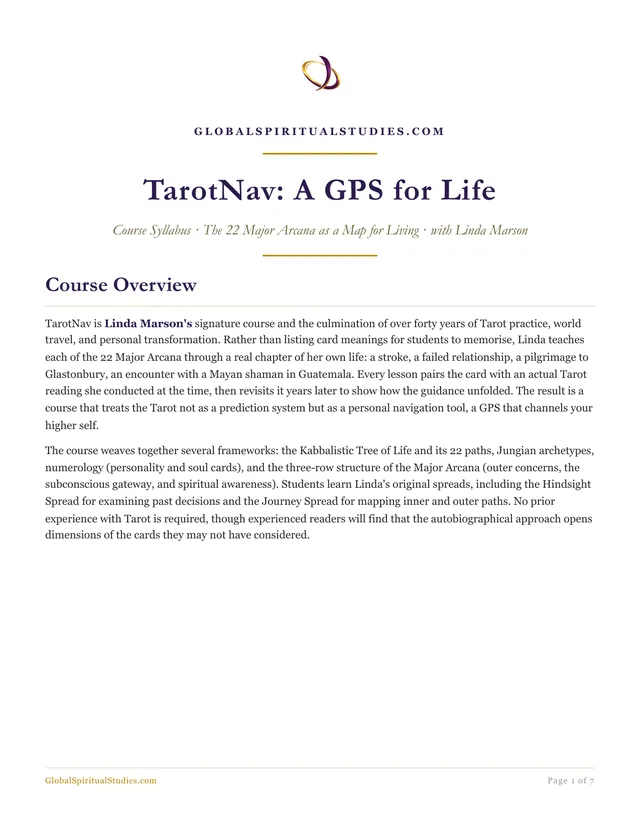
The Energy Body in Tarot
A Guided Practice Through the Seven Chakras · with Philip Carr-Gomm & Steve Hounsome
Nine lessons exploring the hidden energy map in every Tarot deck. Guided meditations with original sound healing music, practical exercises for each chakra, and a transformative journey from root to crown.
- 12 video lessons across nine sessions
- 15 guided meditations
- 12 PDF handouts
- Sound healing music
- Community forum
- Lifetime access
- Final quiz
- Certificate of completion
For a broader view of all seven energy centres, return to our complete chakra guide. To trace the kundalini energy that completes its journey here, our kundalini guide follows the serpent's ascending path across traditions. Return to the third eye chakra to explore the inner sight that precedes this final opening, or descend all the way back to the root chakra to remember where the journey began.
Printable Reference
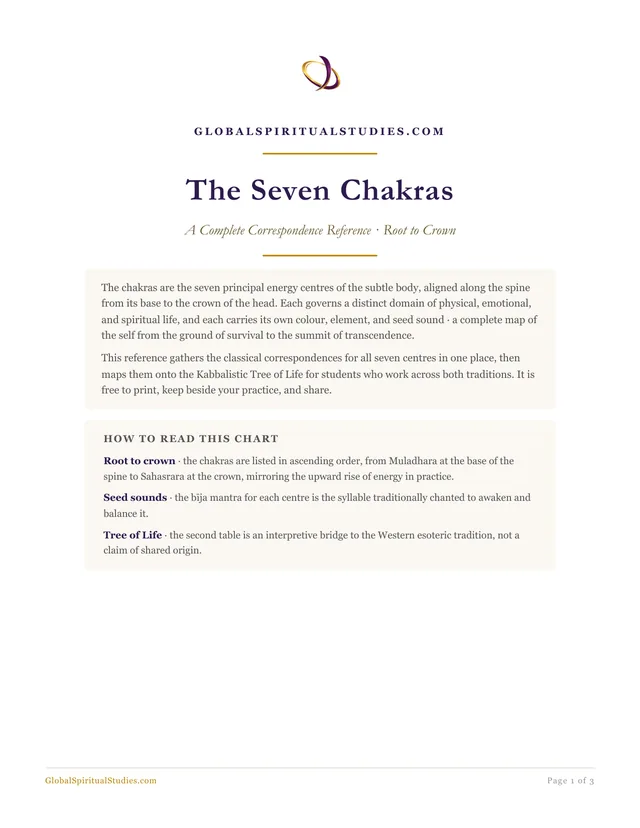
Want every chakra in one chart? See our free 7-chakra reference chart · the complete correspondence table with colours, elements, and seed (bija) sounds, plus a printable PDF to keep beside your practice.
Frequently Asked Questions
What does the crown chakra control?
The crown chakra (Sahasrara) is the centre of spiritual connection, unity consciousness, and transcendence. Unlike other chakras, it does not govern a specific organ system but represents the gateway where individual awareness meets the universal. It is associated with the pineal gland, the element of pure consciousness, and the colour violet or white. In the yogic tradition, its opening is understood as the culmination of the chakra journey, and many other contemplative lineages describe a comparable summit.
How do I know if my crown chakra is blocked?
A blocked crown chakra manifests as spiritual disconnection or apathy, rigid materialism, existential depression, chronic cynicism, inability to feel wonder or awe, clinging to dogma as a substitute for direct experience, and a persistent sense that life lacks meaning. Physical signs traditionally associated with this centre include crown-area headaches, chronic fatigue, disrupted sleep cycles, and sensitivity to light and sound, though these should be evaluated medically rather than attributed solely to energetic causes.
What happens when the crown chakra opens?
An open crown chakra is associated with a felt sense of connection to something greater, moments of deep peace or unity, the capacity to be fully present without striving, a natural arising of compassion, and a release of the need to control. In advanced states, practitioners describe the dissolution of the boundary between self and world while awareness remains clear. This is not a permanent state for most people but something that deepens gradually with consistent practice.
What Tarot card represents the crown chakra?
The Sun (XIX), through its planetary association, represents radiant awareness, unconditional joy, and the illuminated consciousness that sees everything clearly. The completion of the Fool's Journey is also relevant: The Fool (0) as pure potential becomes The Sun (XIX) as awakened awareness, and The World (XXI) at the root represents the full embodiment the journey produces. The Major Arcana as a whole are the crown's domain, representing archetypal forces beyond the elemental world.
What is the Kabbalah equivalent of the crown chakra?
Keter (Crown) is the first and highest sephirah on the Tree of Life, and the most direct correspondence in the entire system · Crown to Crown. Keter is the first emanation from Ein Sof (the Infinite), representing the point where the unmanifest becomes manifest. One does not meditate on Keter but into it, just as one does not achieve Sahasrara but dissolves into it. The journey from Malkuth to Keter mirrors kundalini rising from root to crown.
Part of our complete guide: Chakras · A Complete Guide to the Seven Energy Centers
The thousand-petaled lotus does not bloom by effort. It opens when the conditions are right. Your work is to tend the conditions.