The Root Chakra
Muladhara and the foundation of the energy body
The root chakra, known in Sanskrit as Muladhara, is the first energy centre in the seven-chakra system. Located at the base of the spine near the perineum, it governs the body's relationship with survival, physical safety, and belonging. Mula means root; adhara means support or foundation. Everything else in the energy body rests on what happens here. When the root is stable, the centres above it have a platform to open from. When it is compromised, even the most refined spiritual practice tends to feel unmoored.
The root chakra is associated with the earth element, the colour red, and the adrenal glands. Its domain is the physical: the body itself, material security, the sense of having a right to be here. In Caroline Myss's developmental framework from Anatomy of the Spirit, the root chakra corresponds to tribal power · the energies of family, group identity, and the collective agreements we inherit simply by being born into a particular place and people.
The most detailed classical description of Muladhara comes from the Sat-Cakra-Nirupana (1577), a text by the Bengali Tantric scholar Purnananda Swami, later translated by Arthur Avalon (Sir John Woodroffe) in The Serpent Power (1918). It describes a four-petaled lotus, crimson in colour, at the base of the spine. This guide explores the root chakra drawing on both these classical sources and the cross-tradition connections · from Tarot to Kabbalah to shamanic practice · that illuminate its significance.
In Brief
- - Sanskrit: Muladhara · Element: Earth · Colour: Red · Bija mantra: LAM
- - Location: Base of the spine, perineum · Gland: Adrenals
- - Governs: Survival, physical safety, grounding, material stability, tribal belonging
- - Tarot: The World (XXI) · Kabbalah: Malkuth (Kingdom) · Crystals: Red Jasper, Black Tourmaline
What the Root Chakra Governs
The root chakra's domain is everything that keeps you alive and connected to the physical world. It governs the body's most fundamental concerns: food, shelter, safety, health, and the sense that you have a right to exist. When therapists speak of "basic needs" and psychologists reference Maslow's hierarchy, they are describing the same territory the yogic tradition mapped at Muladhara centuries earlier.
Physical domain: The root chakra is associated with the legs, feet, bones, large intestine, and adrenal glands. It governs the body's fight-or-flight response. Chronic activation of the root centre · the state of perpetual survival anxiety · keeps the adrenals firing and the nervous system locked in sympathetic mode.
Emotional domain: Safety, trust, and belonging. The root chakra holds our earliest experiences of being held, fed, and welcomed into the world. It carries the energetic imprint of our family of origin, our relationship with stability, and our capacity to feel at home in our own body.
Developmental window: In Caroline Myss's framework, the root chakra corresponds to the first seven years of life · the period when tribal identity forms. The beliefs absorbed during this period ("the world is safe" or "the world is dangerous," "I belong" or "I am on my own") become the unconscious foundation on which all later development rests. Root chakra healing often involves revisiting and updating these earliest programmes.
Signs of Blockage
A blocked or underactive root chakra manifests as a fundamental disconnection from the body and the physical world. The signs cluster in recognisable patterns.
Physical signs:
- Chronic lower back pain, particularly in the lumbar region
- Leg and foot problems, including sciatica and poor circulation
- Digestive issues, especially constipation
- Immune system weakness and chronic fatigue
- A general sense of being "ungrounded" · clumsy, spacey, easily destabilised
Emotional and behavioural signs:
- Pervasive anxiety about survival · money, housing, health, safety
- Difficulty trusting others or institutions
- A sense of not belonging anywhere, of being fundamentally homeless
- Hoarding behaviour or an inability to let go of possessions
- Dissociation from the body · living "in the head" while the body feels distant or unfamiliar
- Difficulty with routine, structure, and follow-through
Root chakra blockage is particularly common in people who experienced early instability: frequent moves, financial precarity, neglect, or the absence of consistent caregiving. The centre that should have been strengthened by secure early experience was instead taught to contract.
Signs of Overactivity
An overactive root chakra produces the opposite pattern: an excess of survival energy that dominates the personality and crowds out the qualities of the higher centres.
- Excessive materialism · defining safety purely through accumulation
- Rigidity, resistance to change, and a need for absolute control
- Aggression or dominance in relationships, rooted in fear rather than strength
- Chronic anger, particularly territorial anger
- Over-identification with family, tribe, or group to the point of losing individual identity
- Physical heaviness, lethargy, or excessive weight gain, particularly in the lower body
Overactivity at the root often coexists with underactivity at the heart or third eye. The system compensates: when the lower centre is working too hard, the upper centres do not get enough energy to function fully.
Healing Techniques for the Root Chakra
Meditation
The simplest root chakra meditation is also the most effective: sit or lie down, bring your attention to the base of the spine, visualise a sphere of red light there, and breathe deeply into the belly. With each exhale, feel the energy extending downward through the legs and into the earth. The seed mantra LAM, chanted aloud in a low tone, adds vibrational support. Ten minutes daily is enough to begin shifting a chronically contracted root. Not sure if your root chakra needs attention? Take our free Tarot chakra quiz to discover which energy centre is calling you through the Tarot.
Yoga Poses
- Mountain Pose (Tadasana): The most fundamental grounding posture. Stand barefoot, feel all four corners of each foot pressing into the earth.
- Warrior I and II (Virabhadrasana): Build strength and stability in the legs while cultivating a sense of inner power rooted in the ground.
- Child's Pose (Balasana): Brings the forehead to the earth, activating the root's connection to safety and surrender.
- Garland Pose (Malasana): A deep squat that opens the hips and brings the centre of gravity close to the earth.
Crystals
Red Jasper is the primary root chakra stone · grounding, stabilising, and deeply earthy. Black Tourmaline adds energetic protection. Hematite strengthens the connection to the physical body. Smoky Quartz transmutes negative energy while keeping you grounded. Place any of these at the base of the spine during meditation or carry one in a pocket throughout the day. Our complete crystal-chakra guide covers selection, cleansing, and a full crystal-on-body meditation practice.
Sound
The bija mantra LAM is the most direct sound healing for the root. In modern sound healing practice, the Solfeggio frequency 396 Hz is often associated with this centre, though the historical basis for these specific frequency assignments is debated among researchers. Drumming · particularly deep, rhythmic drumming · is perhaps the oldest root chakra healing technique: it synchronises the body with the heartbeat of the earth.
Embodied Practices
- Walking barefoot on grass, soil, or sand (grounding / earthing)
- Gardening · hands in earth, tending living things
- Cooking and eating grounding foods: root vegetables, beans, red fruits, warm soups
- Physical exercise, especially anything that engages the legs: hiking, running, dancing
Tarot Correspondences
A note on two maps. The correspondences that follow use the planetary system, which seats The World at the root, through Saturn. Philip Carr-Gomm and Steve Hounsome's The Energy Body in Tarot teaches a different arrangement · the Three Septenaries, a 7x3 grid that gives every numbered Major Arcana card both a chakra and a realm of Body, Mind or Spirit. There The World belongs to the crown at the level of Spirit, and the root is held by The Magician, Strength and The Devil. Both are working maps rather than doctrine, and the one worth keeping is the one that opens the cards for you.
In the planetary correspondence system, the root chakra is associated with Saturn and its Major Arcana card, The World (XXI). The World card represents completion, mastery of the material plane, and the full embodiment of one's place in the cosmos. It is the last numbered card in the Major Arcana · the moment when the Fool's journey through the archetypal realm is complete and the soul is fully incarnate. Saturn, the slowest of the classical planets and the ruler of lead, the densest of the traditional metals, governs structure, discipline, time, and the physical laws that ground consciousness in matter. A Tarot reading can reveal where this grounding is absent · where the foundation has cracked beneath a life that looks stable on the surface.
The root chakra's suit correspondence is Pentacles (earth element). When Pentacles appear in a Tarot chakra spread at the root position, they confirm that the reading is engaging the root's native element. The energy is operating in its home domain: questions of material security, physical health, work, and the body.
When a Major Arcana card other than The World appears at the root position in a chakra spread, it signals that archetypal forces are active at your foundation. The Tower at the root suggests a structural upheaval in your sense of security. The Empress suggests nurturing, abundance, and the feminine principle grounding your base. Each card brings its own teaching to the root's domain. Philip Carr-Gomm explores these root-level Tarot patterns systematically in The Energy Body in Tarot, drawing on his decades of work with the Druid tradition's own understanding of grounding and sacred relationship with the earth.
The Kabbalah Parallel · Malkuth
Malkuth (Kingdom) is the tenth and lowest sephirah on the Tree of Life, and it is the most widely agreed sephirah-to-chakra correspondence in the entire system. Just as Muladhara is the foundation of the chakra column, Malkuth is the foundation of the Tree · the point where divine energy becomes fully manifest in the physical world.
Malkuth is called the Kingdom because it is where consciousness "reigns" over matter. It is the sephirah of the body, the earth, and sensory experience. In Kabbalistic meditation, one begins at Malkuth and ascends toward Keter (Crown), just as kundalini begins at Muladhara and rises to Sahasrara. The direction is the same, and the structural correspondence is difficult to dismiss as coincidence, even for scholars cautious about conflating traditions.
The Shekhinah · the feminine divine presence in Kabbalistic theology · dwells at Malkuth. She is the divine-in-exile, the sacred in matter, the spark of the infinite that has descended fully into the physical plane. Her presence at the root of the Tree mirrors Shakti's coiled dormancy at the root of the spine. Both traditions teach that the journey toward the divine begins not by escaping the body but by fully inhabiting it.
Cross-Cultural Perspectives
The root chakra's territory · survival, grounding, connection to the earth · appears across Hindu, Taoist, Celtic, and shamanic traditions, though the framing varies considerably.
Shamanic traditions associate the root with the Lower World in the three-worlds cosmology. The Lower World is the realm of earthy, primal energy, of animal spirits and ancestral power. In shamanic journeying, descent to the Lower World addresses the same concerns the root chakra governs: safety, belonging, connection to the land, and the body's relationship with the forces that sustain it. One contemporary practice meets the Earth through a flower: in Flower Essence Shamanism, herbalist Gina Kearney guides students into journey with Nicotiana, the Earth flower among her four elemental flowers.
Taoist tradition places the root's territory within the Lower Dantian (below the navel), which stores Jing · the body's foundational essence, inherited from parents and finite in quantity. Jing governs vitality, reproduction, and physical resilience. The Taoist emphasis on preserving and refining Jing parallels the yogic understanding that root chakra health is the prerequisite for all higher development.
Celtic tradition maps the root to the lower portion of the Cauldron of Warming (Coire Goiriath), which is upright at birth and provides the body's basic life force. Unlike the upper cauldrons, which must be turned through effort and experience, the Cauldron of Warming is given · it is the birthright energy that keeps you alive. When it is weakened through hardship or neglect, the entire system falters.
Guided Root Chakra Practice
This ten-minute practice can be done daily. It combines grounding visualisation, breath, and the seed mantra.
- Sit or stand with your feet flat on the floor. If sitting, feel your sit bones pressing into the seat. If standing, feel all four corners of each foot.
- Close your eyes and take three deep belly breaths. Let each exhale be longer than the inhale.
- Bring your attention to the base of your spine. Visualise a sphere of deep red light pulsing there, warm and heavy.
- With each inhale, feel the red light brighten. With each exhale, feel it send roots downward · through your legs, through the floor, deep into the earth.
- Begin chanting LAM (rhymes with "calm") in a low, resonant tone. One chant per exhale. Feel the vibration in your pelvis and lower belly.
- Continue for seven rounds of LAM, then release the mantra and simply sit with the feeling of being rooted.
- Spend two minutes in stillness, feeling the weight of your body, the solidity of the surface beneath you, the gravity that holds you here.
- Open your eyes slowly. Feel your feet on the floor before you move.
If you work with crystals, hold a piece of Red Jasper or Black Tourmaline in your non-dominant hand throughout the practice. If you find that the root is a centre that consistently needs attention, consider extending this to a twenty-minute practice and adding the breathwork pairings described in our chakra meditation guide.

Featured Course
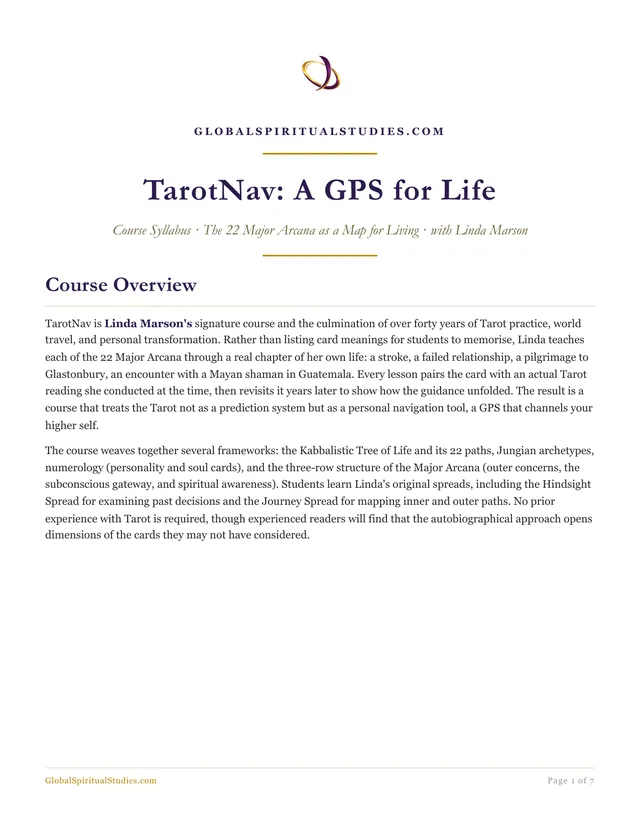
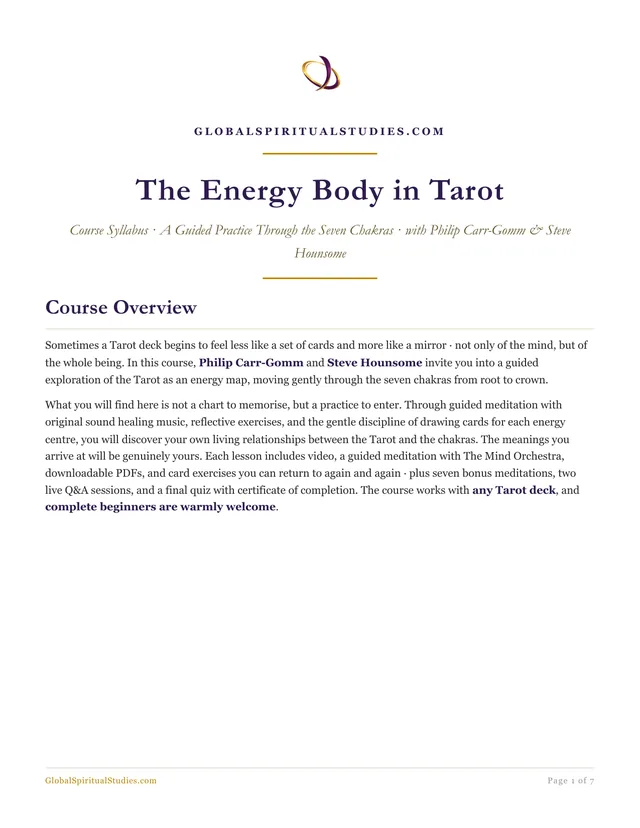
The Energy Body in Tarot
A Guided Practice Through the Seven Chakras · with Philip Carr-Gomm & Steve Hounsome
Nine lessons exploring the hidden energy map in every Tarot deck. Guided meditations with original sound healing music, practical exercises for each chakra, and a transformative journey from root to crown.
- 12 video lessons across nine sessions
- 15 guided meditations
- 12 PDF handouts
- Sound healing music
- Community forum
- Lifetime access
- Final quiz
- Certificate of completion
For a broader view of all seven energy centres, return to our complete chakra guide. To explore the relationship between the root and the kundalini serpent energy that lies coiled at its base, our kundalini guide traces the ascending path from root to crown across multiple traditions. Continue up the energy body with our sacral chakra guide.
Printable Reference
Want every chakra in one chart? See our free 7-chakra reference chart · the complete correspondence table with colours, elements, and seed (bija) sounds, plus a printable PDF to keep beside your practice.
Related reading · If grounding draws you toward the earth itself, explore how meditation and shamanic journey differ and where they meet, and meet Nicotiana, the Earth flower among the four elemental flowers.
Frequently Asked Questions
What does the root chakra control?
The root chakra (Muladhara) governs the body's relationship with survival, physical safety, and material stability. It is associated with the earth element, the adrenal glands, and the legs, feet, and lower spine. Emotionally, it holds the sense of belonging, trust, and the right to exist. In Caroline Myss's developmental framework, it corresponds to tribal power and the energetic patterns absorbed from family and group identity in the first seven years of life.
How do I know if my root chakra is blocked?
Common signs of a blocked root chakra include chronic anxiety about money or safety, difficulty trusting others, a persistent sense of not belonging, lower back pain, digestive issues (especially constipation), fatigue, and a general feeling of being ungrounded or disconnected from your body. Hoarding behaviour, difficulty with routine and structure, and a tendency to live in your head rather than your body are also associated with root chakra blockage.
What is the fastest way to heal the root chakra?
The most effective root chakra practices are also the simplest: daily grounding meditation with the seed mantra LAM, walking barefoot on earth, physical exercise that engages the legs, and eating warm, grounding foods like root vegetables and soups. Consistency matters more than intensity. Ten minutes of daily root chakra meditation will produce more lasting change than an occasional hour-long session. Working with grounding crystals like Red Jasper or Black Tourmaline can deepen the practice.
What Tarot card represents the root chakra?
In the planetary correspondence system, the root chakra is associated with Saturn and The World card (XXI), which represents completion, material mastery, and full embodiment. The suit of Pentacles (earth element) is the Minor Arcana correspondence for the root chakra. When Pentacles appear at the root position in a Tarot chakra spread, they indicate that the reading is engaging the root chakra's native elemental energy.
What is the Kabbalah equivalent of the root chakra?
Malkuth (Kingdom) is the sephirah on the Kabbalah Tree of Life that corresponds to the root chakra. It is the tenth and lowest sephirah, representing the physical world and the point where divine energy becomes fully manifest in matter. This is the most widely agreed sephirah-to-chakra correspondence in the entire system. The Shekhinah, the feminine divine presence, dwells at Malkuth, mirroring Shakti's dormancy at the root of the spine in the Hindu tradition.
Part of our complete guide: Chakras · A Complete Guide to the Seven Energy Centers
Before you can rise, you must know where you stand.