Hod · Splendour
The Eighth Sephirah, Mercury's Realm, and the Thinking Mind on the Tree
Hod is the eighth Sephirah on the Kabbalah Tree of Life, and its Hebrew name (הוד) means Splendour or Glory. It is the sphere of the intellect · the seat of reason, language and analysis, governed by Mercury and seated at the foot of the Pillar of Severity. It governs the activity you are engaged in right now: reading, analysing, forming concepts, working with language. Its splendour is not the cold efficiency of mere calculation but the genuine radiance of a mind that perceives clearly, communicates honestly, and understands the structures that underlie reality. Hod is the part of you that can take a tangled experience and find the pattern within it, the part that names things, categorises them, and makes them available to conscious thought.
Positioned on the Pillar of Severity (the left side of the Tree), Hod works in dynamic partnership with Netzach, the sphere of feeling and instinct on the opposite pillar. Together they form the base pair of what the tradition calls the Psychological or Astral Triad. Where Netzach feels, Hod thinks. Where Netzach desires, Hod discriminates. Neither is complete without the other, and understanding Hod means understanding not only the power of the rational mind but also its proper limits.
This guide explores Hod's meaning, correspondences, connections on the Tree, psychological dimension, shadow side, and practical applications for students of Kabbalah and Tarot.
If you would like to study Hod with a teacher rather than on your own, Evelynne Joffe walks the whole Tree in Living the Tree of Life · The Ten Sephirot · eight classes from Malkuth to Kether, taken at your own pace, with both live Q&A sessions recorded in the course.

Featured Program · The Whole Tree
The Complete Tree of Life
Sephirot · Paths · Tarot on the Tree · with Evelynne Joffe
Three courses in one program: Part 1’s eight classes on the Ten Sephirot with their two recorded Q&As, Part 2’s twenty classes on the twenty-two Paths with the 2026 Cohort’s two live Q&As, and Tarot on the Tree of Life. You climb in order, the Sephirot first and then the Paths that join them.
- Three courses
- 29 classes
- Four Q&As (two recorded, two live)
- Three certificates
- Handouts & transcripts
- Lifetime access
What Is Hod?
Hod (Hebrew: הוד) means "Splendour" or "Glory." It is the eighth Sephirah on the Tree of Life and sits on the Pillar of Severity (also called the Pillar of Form), the left column of the Tree. This placement is significant. The Pillar of Severity is the pillar of limitation, discipline, and structure. It is not punitive; it is the force that gives shape to raw energy. Without form, force dissipates. Hod provides the intellectual structures that allow experience to become comprehensible.
The planet assigned to Hod is Mercury, the swift messenger of the gods in classical mythology. Mercury governs communication, language, commerce, travel, and the operations of the rational mind. Every act of naming, defining, explaining, writing, or systematic analysis belongs to Mercury's domain, and therefore to Hod. This includes the study of Kabbalah itself: the very activity of reading this guide, forming mental models of the Tree, and placing each Sephirah in relationship to the others, is a Hod activity.
In the structure of the lower Tree, Hod occupies the left side of the Psychological Triad (sometimes called the Astral Triad), with Netzach on the right and Yesod at the base below. This triad governs the emotional and mental dimensions of personality, the territory of feelings, thoughts, habits, and the subconscious patterns that shape daily life. Hod's specific role within this triad is the thinking function: the capacity to analyse, categorise, communicate, and reason.
The key teaching of Hod is that intellect is a form of splendour. The tradition does not treat the rational mind as an obstacle to spiritual development. Rather, it recognises that clear thinking, honest communication, and disciplined analysis are genuine gifts, forms of divine light operating through the structure of language and logic. The problem arises not when the mind thinks but when it thinks it is the whole story.
In Evelynne Joffe's teaching on the Tree, Hod is presented as one half of a vital polarity. Students are encouraged to develop their Hod capacities (rigorous study, precise language, intellectual honesty) while simultaneously cultivating Netzach's counterbalancing gifts (emotional fluency, aesthetic sensitivity, embodied feeling). The goal is not to choose between head and heart but to hold both in dynamic relationship.
Symbolism and Correspondences
Hod's correspondences form a coherent portrait of the intellectual faculty in its highest expression: swift, luminous, precise, and devoted to truth. Each symbol reinforces the central theme of mind as a vessel for divine light.
| Attribute | Correspondence |
|---|---|
| Number | 8 |
| Hebrew | הוד (Hod) |
| Meaning | Splendour · Glory |
| Pillar | Pillar of Severity (Left) |
| Divine Name | Elohim Tzabaoth ("God of Hosts") |
| Archangel | Michael (or Raphael) |
| Angelic Order | Beni Elohim ("Sons of God") |
| Planet | Mercury |
| Colour | Orange (Queen Scale) |
| Body | Right hip and leg |
| Spiritual Experience | The Vision of Splendour |
| Virtue | Truthfulness |
| Vice | Falsehood · Dishonesty |
| Tarot | The four Eights |
| Qliphah | Samael (the Poison of God) |
Free printable chart: all 10 Sephirot with Hebrew names, pillars, Tarot and planetary correspondences at a glance · see the complete Tree of Life chart.
See the divine name, archangel and angelic order of every Sephirah in the free Kabbalah Archangels chart, and how Hod stands at the base of the Pillar of Severity, one of the Three Pillars of the Tree.
The divine name Elohim Tzabaoth means "God of Hosts" or "God of Armies," which may seem surprising for the sphere of the intellect. The "hosts" refer to the ordered ranks of ideas, concepts, and forms that constitute the intelligible structure of reality. The mind, at its best, perceives an ordered universe, and this ordered perception is an act of worship.
The archangel traditionally assigned to Hod is Michael, the warrior of light (though some systems place Raphael here, with Michael at Tiferet). Michael's association with truth and the defeat of falsehood aligns with Hod's virtue of truthfulness and its vice of dishonesty. The battle of Hod is the battle for intellectual integrity.
The colour orange combines the warmth of fire with the brightness of sunlight, suggesting a mind that is both active and illuminated. Orange is a colour of alertness, vitality, and rapid perception, qualities that belong to Mercury's swift intelligence.
In the Tarot, Hod holds the four 8s. The Eight of Swords (mental confinement, the prison of overthinking), the Eight of Wands (swift communication, information in motion), the Eight of Cups (the intellectual recognition that it is time to leave), and the Eight of Pentacles (disciplined craftsmanship, the mastery that comes from dedicated study) all express different facets of Hod's nature. For a fuller exploration of how the number cards map onto the Sephirot, see our Kabbalah and Tarot guide.
Hod on the Tree
Hod connects to five other Sephirot, making it one of the most interconnected spheres on the Tree. Its paths reach downward to the physical world, sideways to its complement, upward to the dream layer and the ethical Sephirot, creating a web of intellectual exchange.
Path 31: Hod to Malkuth · Judgement (Shin)
The descending path to Malkuth carries Judgement (XX) and the Mother letter Shin, associated with Fire. This is the path through which intellectual understanding becomes action in the physical world. The fire of Shin suggests that the movement from thought to deed requires a transformation, a burning away of hesitation. When you act on a clear idea, you are walking this path.
Path 30: Hod to Yesod · The Sun (Resh)
Connecting to Yesod below and to the right, this path carries The Sun (XIX) and the letter Resh. The Sun brings light to the lunar realm of the subconscious. This path represents the process by which rational awareness illuminates what was previously hidden in the dream world. Analysis of dreams, interpretation of symbols, and the conscious study of unconscious patterns all belong here.
Path 27: Hod to Netzach · The Tower (Peh)
The horizontal path crossing the Tree to Netzach carries The Tower (XVI) and the letter Peh, meaning "mouth." This is perhaps the most dramatic path on the lower Tree. The Tower represents the sudden destruction of false structures. Between thinking and feeling, between Hod and Netzach, there is a passage that can only be made through the collapse of intellectual pretence. When the mind's carefully constructed model of reality encounters a feeling it cannot contain, the Tower falls. This is painful, but it is also liberating: the mind is freed from its own rigidity.
Path 26: Hod to Tiferet · The Devil (Ayin)
The ascending path to Tiferet, the heart centre of the Tree, carries The Devil (XV) and the letter Ayin, meaning "eye." This is the path explored in depth in Evelynne Joffe's course The Devil: Scapegoat or Light-bringer? The Devil card, in the Kabbalistic tradition, does not represent evil but the bondage of consciousness to material or intellectual forms. The path from Hod to Tiferet requires the mind to recognise its own chains: the beliefs, assumptions, and mental habits that prevent it from opening to the deeper integration of the Self.
Path 23: Hod to Geburah · The Hanged Man (Mem)
The ascending path to Geburah, the sphere of strength and severity above, carries The Hanged Man (XII) and the Mother letter Mem, associated with Water. This path asks the intellect to surrender its habitual orientation, to see the world from a completely different angle. The Hanged Man's reversal of perspective is what happens when the thinking mind allows itself to be submerged in a larger wisdom, letting go of its need to control and classify in order to receive a vision it could not have generated on its own.
These five connections make Hod a sphere of constant exchange. It sends its analytical light downward into the physical world and the subconscious, negotiates its relationship with feeling across the horizontal axis, and reaches upward toward the deeper centres of the Self and divine strength. The mind, in the Kabbalistic view, is not an isolated tower. It is a crossroads.
The Psychological Dimension
In Jungian terms, Hod corresponds to the thinking function, one of Jung's four functions of consciousness (alongside feeling, sensation, and intuition). The thinking function operates through Logos: the principle of rational order, logical analysis, and the capacity to make distinctions. It is the part of the psyche that classifies, explains, argues, and seeks objective truth.
Jung was careful to distinguish between thinking as a conscious function and thinking as a defence mechanism. When the thinking function is healthy and well-developed, it provides clarity, precision, and honest engagement with reality. When it becomes overdeveloped at the expense of other functions, it rigidifies into intellectualism: the substitution of concepts for experience, of argument for understanding, of being right for being present.
In daily life, Hod consciousness shows up as the impulse to understand. It is the part of you that wants to know how something works, that reaches for a book rather than sitting with ambiguity, that feels most comfortable when experience has been named and categorised. This impulse is valuable. Without it, there is no science, no philosophy, no scholarship, no coherent communication. But when it operates without the counterbalance of Netzach's feeling, it becomes sterile: all structure and no warmth, all precision and no meaning.
The spiritual experience of Hod is the Vision of Splendour. This is the moment when the mind perceives the genuine beauty of an intellectual structure, when a mathematical proof, a well-formed argument, a clear explanation, or a precisely articulated insight reveals something luminous. It is the experience of truth as radiance. Scientists, philosophers, and scholars of every tradition have described this vision: the sudden recognition that the structure of reality is not merely comprehensible but beautiful.
For Tarot readers, Hod's psychological dimension has immediate practical relevance. The interpretive process, laying out cards, reading symbols, forming a coherent narrative from disparate images, is fundamentally a Hod activity. A skilled reader needs Hod's analytical clarity to make sense of a spread. But the reading only comes alive when Netzach's emotional intelligence enters the picture, when the reader feels the resonance of a card and speaks from something deeper than analysis alone.
The Shadow Side: The Qliphoth of Hod
The Qliphah of Hod is called Samael, which means "the Poison of God." This is the shadow of the intellect: intellectual dishonesty, sophistry, and the use of reason in the service of deception.
When Hod's energy is distorted, the mind does not seek truth but seeks to win. Arguments become weapons. Language becomes manipulation. The brilliant intelligence that could illuminate reality is instead deployed to obscure it, to construct elaborate justifications for positions held for emotional reasons, or to deceive others (and oneself) through the skilful arrangement of words. This is the "poison" in Samael's name: reason turned toxic.
Recognise this pattern in its subtler forms: the rationalisation that sounds convincing but avoids the real issue, the intellectual framework that protects you from feeling something uncomfortable, the substitution of reading about experience for having the experience itself. Samael does not announce itself as dishonesty. It arrives dressed as cleverness, as nuance, as being more sophisticated than those who simply feel.
The antidote is Hod's own virtue: truthfulness. Not merely avoiding outright lies, but the deeper honesty of being willing to say "I do not know," of allowing the mind to admit its own limits, and of using intelligence in service of genuine understanding rather than self-protection. The mind's splendour returns the moment it stops performing and starts perceiving.
Working with Hod
Hod is strengthened through disciplined study, honest writing, and any practice that requires the mind to engage rigorously with material while remaining open to what it does not yet understand. The following exercise is designed to develop Hod's best qualities while keeping the shadow at bay.
Practice · The Mercury Journal
Choose a topic you are currently studying, whether it is Kabbalah, Tarot, psychology, or any subject that engages your thinking. Set a timer for twenty minutes.
Write continuously about the topic without pausing to edit, polish, or second-guess. Do not aim for elegance. Aim for honesty. Write what you actually understand. Write what confuses you. Write where your thinking breaks down and you are not sure what you mean.
When the timer ends, read what you have written. Underline the sentences where you were most honest. Circle the places where you were performing, where you wrote to sound knowledgeable rather than to understand. This distinction, between genuine thought and intellectual performance, is the central lesson of Hod.
Close the exercise by silently naming one thing you do not understand. Hold it without trying to resolve it. This is the mind's offering to its own limits: the beginning of wisdom.
For a structured study of Hod within the complete framework of the Tree, Evelynne Joffe's Living the Tree of Life course provides guided meditations and reflective exercises for each Sephirah, helping students develop the intellectual and emotional balance that the Tree demands.
Common Misconceptions
"Hod is opposed to spirituality"
Some students assume that because Hod governs rational analysis, it must be at odds with spiritual experience. The Kabbalistic tradition disagrees. The Tree of Life includes the intellect as a divine emanation. Hod's light is a form of spiritual illumination. The Vision of Splendour is a genuine mystical experience. The problem is not the mind itself but the mind that believes it is the whole of reality.
"Hod and Netzach are in conflict"
The relationship between Hod and Netzach is not a war between thinking and feeling. It is a polarity, a creative tension in which each side needs the other. Feeling without thought becomes chaotic. Thought without feeling becomes sterile. The path between them, The Tower, is dramatic precisely because the false separation between the two must be shattered before genuine integration can occur.
"You should 'balance' Hod by thinking less"
Balancing Hod does not mean suppressing the intellect. It means developing feeling alongside thought, so that the mind has an equal partner. A strong Hod with a strong Netzach produces a person who can think clearly and feel deeply. A weakened Hod serves no one. The goal is fullness of both functions, not the diminishment of either.
Continue Your Study
Where to go next from Hod, in the order most students find useful:
- the 22 paths and their Tarot correspondences · the five paths that radiate from Hod, each with its Hebrew letter and Major Arcana card
- Binah · the head of the Pillar of Severity, the pillar Hod completes
- Geburah · the middle station of the Pillar of Severity, directly above Hod
- the 22 Hebrew letters and their meanings · the letters themselves · Hod’s own territory of language and number
- the Liber 777 correspondences · Hod’s four colour scales, stone, perfume and Egyptian god
- Living the Tree of Life · Part 2: The Paths · the companion course on the twenty-two paths
Recommended Courses
A comprehensive journey through all ten Sephirot with guided meditations for each sphere, including detailed exploration of Hod's intellectual faculty and its relationship to Netzach.
A focused exploration of the Devil card through the lens of Path 26, the journey from Hod to Tiferet. Why the Kabbalistic tradition says the devil does not exist, and what the card actually represents.
For a printable reference to all Sephirot and paths, download our free Kabbalah Tree of Life PDF guide.
Ready to take this inward? Learn to work with Hod in meditation as part of a complete Tree of Life practice.
The mind's highest achievement is not the accumulation of knowledge but the recognition of what it does not know. Hod's splendour shines brightest in the moment when the intellect, having done its honest work, opens its hands and allows something larger to enter.
For more in this tradition, browse our Kabbalah course collection.
Sources & Tradition
The material presented here for Hod draws on the foundational texts and teachers of the Tree of Life · the Sefer Yetzirah (Book of Formation), the Zohar, the Sephirotic attributions codified by the Hermetic Order of the Golden Dawn, and Dion Fortune’s The Mystical Qabalah (1935). The Mercury attribution and the Hod / Netzach polarity of intellect and feeling follow the Golden Dawn tables as transmitted by Fortune. The divine name, archangel and angelic order given in the table above follow our own Kabbalah Archangels chart, which sets out the Golden Dawn and Liber 777 attributions and notes where the tradition is divided. The living, practice-based reading of Hod reflects Evelynne Joffe’s Living the Tree of Life courses taught at Global Spiritual Studies.
Frequently Asked Questions
What is Hod in Kabbalah?
Hod is the eighth Sephirah on the Kabbalah Tree of Life. Its Hebrew name (הוד) means Splendour or Glory. It is the sphere of the intellect · rational analysis, communication and the thinking function · seated at the foot of the Pillar of Severity, where it provides the mental structures that give form to experience. It is associated with the planet Mercury, the divine name Elohim Tzabaoth, the archangel Michael, the colour orange, and the four Eights in the Tarot. Its virtue is truthfulness and its vice is falsehood.
What is the relationship between Hod and Netzach?
Hod and Netzach form a complementary polarity on the Tree of Life. Hod (thinking, analysis, Logos) sits on the Pillar of Severity, while Netzach (feeling, desire, Eros) sits on the Pillar of Mercy. Together they form the base of the Psychological Triad. The path between them carries The Tower card, suggesting that the rigid separation of thinking and feeling must sometimes be shattered before genuine integration can occur. The goal is not to choose between them but to develop both functions fully.
Which Tarot card connects Hod to Tiferet?
The Devil card (XV) sits on Path 26, which connects Hod to Tiferet. In the Kabbalistic tradition, this card represents the bondage of consciousness to intellectual or material forms, not evil in the conventional sense. The path asks the mind to recognise its own limiting beliefs and assumptions in order to open to the deeper integration of the heart centre. Evelynne Joffe explores this path in detail in her course The Devil: Scapegoat or Light-bringer? at Global Spiritual Studies.
Where is Hod on the Tree of Life?
Hod is the eighth Sephirah, sitting at the foot of the Pillar of Severity on the left-hand side of the Tree of Life, below Geburah and across from Netzach. With Netzach and Yesod it forms the lowest triad, the sphere of the personality. Five paths run from it: Judgement to Malkuth, the Sun to Yesod, the Tower to Netzach, the Devil to Tiferet, and the Hanged Man to Geburah.
What is the Qliphah of Hod?
The Qliphah of Hod is Samael, which means "the Poison of God." It is the shadow of the intellect: intellectual dishonesty, sophistry, and the use of reason in the service of deception. When Hod's energy is distorted the mind does not seek truth but seeks to win · arguments become weapons and language becomes manipulation. The antidote is Hod's own virtue, truthfulness, including the deeper honesty of being willing to say "I do not know."
Featured Course · 2026 Cohort
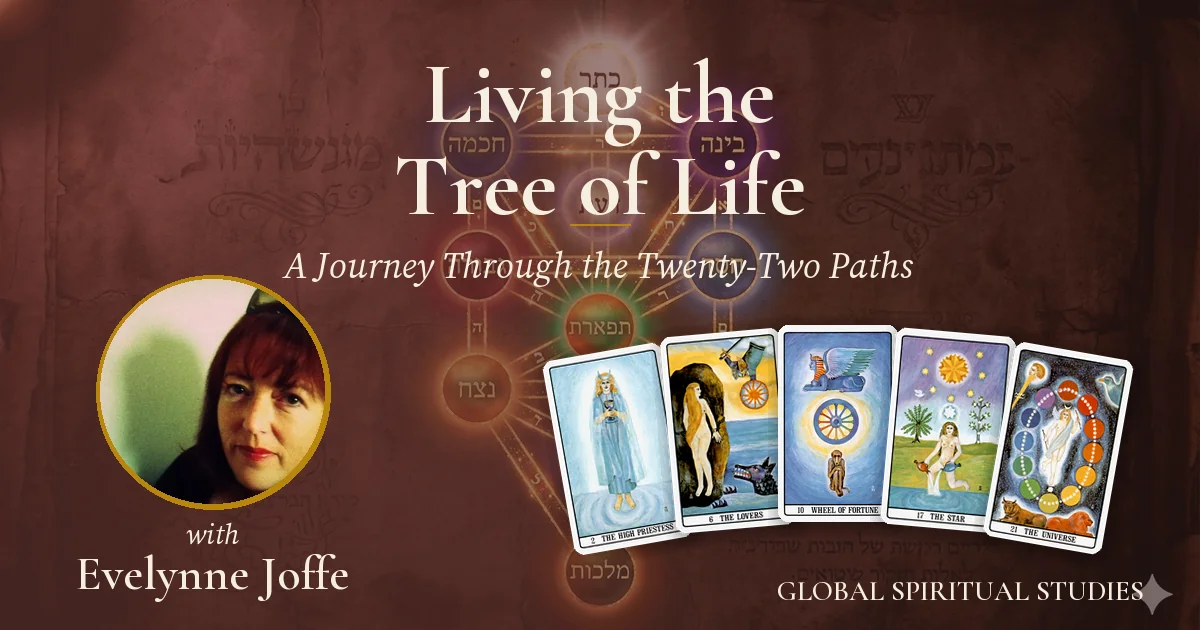
Living the Tree of Life · Part 2: The Paths
The 2026 Cohort · with Evelynne Joffe, Director of the Institute of Esoteric Studies
Across twenty classes Evelynne climbs all twenty-two Paths of the Tree, from Path 32 to Path 11, opening each one through its Hebrew letter and its Tarot card. The 2026 Cohort adds two live Q&A sessions with her on Zoom in Q1 2027, exact dates to follow, and both are recorded and added to the course. Part 1 or an equivalent grounding in the Sephirot is recommended before you begin.
- Twenty classes
- Two live Q&As
- Path 32 to Path 11
- 11.5+ hours of video
- Handouts & transcripts
- Subtitles
- Private course forum
- Quiz & certificate
- Lifetime access
About this article
Based on the teachings of Evelynne Joffe
Kabbalist, Tarot Counsellor & Dream Therapist · Director, Institute of Esoteric Studies
This article was written by the Global Spiritual Studies editorial team, drawing on Evelynne Joffe's Kabbalah teaching for Global Spiritual Studies. Evelynne directs the Institute of Esoteric Studies in Melbourne, Australia, and has spent more than thirty years teaching students to read the Tree of Life as a practical map for self-realization. In 1992 she co-founded the Tarot Guild of Australia.
Study this with her
Living the Tree of Life · Part 1: The Ten Sephirot
Living the Tree of Life · Part 2: The Twenty-Two Paths
The Complete Tree of Life
More from Evelynne Joffe →