The Whip
The Whip (Card 11) is a Lenormand oracle card representing conflict, repetition, and physical activity. It signals arguments, heated discussions, disciplined routines, and the tension that builds when opposing forces meet.
Listen to the rhythm of it.
Every conflict has a pattern. The same argument, rising and falling in the same cadence. The same frustration, arriving on the same schedule. The same tension in the body, tightening in the same places it always does. The Whip is the eleventh card in the Lenormand deck, and it is the card of these repetitions · the cycles of intensity that define so much of human experience, whether they take the form of argument, discipline, passion, or punishment.
The Whip is not subtle. Where the Clouds obscure and the Snake winds, the Whip strikes. Its energy is direct, physical, and forceful. And while its appearance in a reading often signals conflict, experienced readers know that the Whip's energy is not exclusively destructive. The same force that fuels an argument also fuels a workout. The same intensity that drives a fight also drives passionate love. The Whip asks what you do with fire · whether you burn with it or use it to forge something stronger.
At a Glance

| Attribute | Detail |
|---|---|
| Card Number | 11 |
| Playing Card | Jack of Clubs |
| Element | Fire |
| Polarity | Negative |
| Core Keywords | Conflict, arguments, discussions, repetition, discipline, physical activity, punishment, passion |
| Timing | Repetitive events · patterns that recur. November, 11 days/weeks/months, or the 11th of the month. Cycles of conflict or activity. |
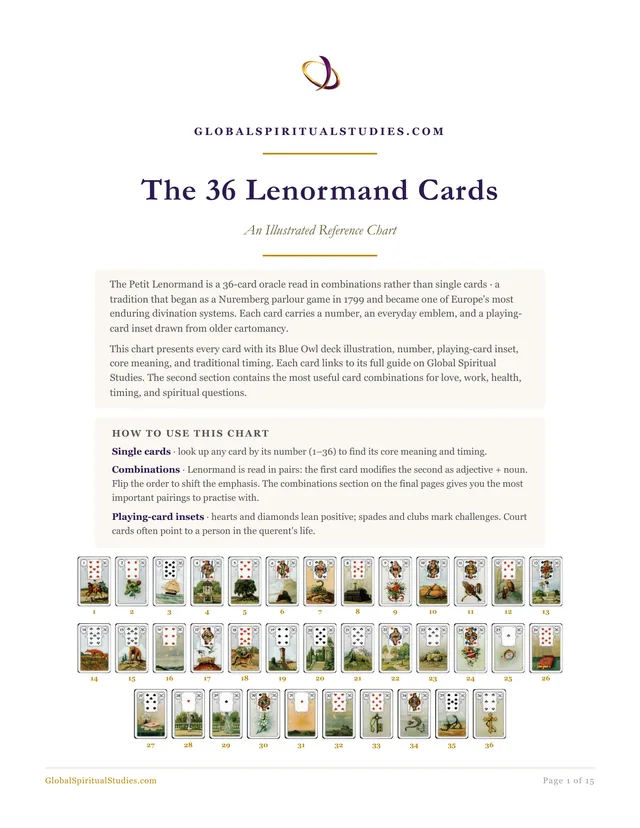
Free printable chart: see the complete 36-card Lenormand chart · every card with its playing-card inset, core meaning, and timing, plus a cheat sheet of the most useful combinations.
Origins and History
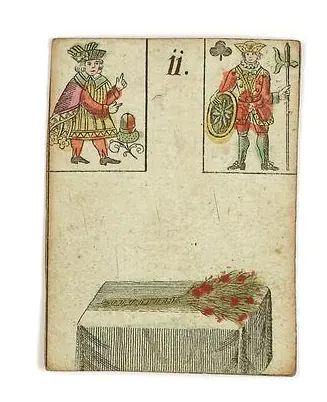
In Hechtel's Das Spiel der Hoffnung (The Game of Hope), the Whip occupied Square 11. The original tile depicted a whip or bundle of birch rods · an image that carried strong associations in 18th-century German culture. Birch rods were used for corporal punishment in homes and schools, but they also appeared in folk traditions associated with cleansing and purification. In some Germanic customs, ritual whipping during festivals was believed to drive out evil spirits and promote fertility.
Under the name the Rod, the card's 1846 entry gives quarrels in the family, domestic afflictions, want of peace among married persons, and also fever and protracted sickness. Conflict and argument are therefore original. Repetition is not in the entry, nor are the sexual readings the card later attracted, and the illness clause has largely dropped out of modern practice. The Jack of Clubs playing card correspondence points to a young, energetic man traditionally associated with competitive or combative energy.
Across Lenormand traditions, the Whip generates more interpretive variation than many cards. German readers tend to emphasise conflict, punishment, and physical discipline. French tradition gives greater weight to sexual overtones and passionate encounters · the Whip as an instrument of desire rather than punishment. Brazilian Baralho Cigano readers often connect the Whip to spiritual cleansing, the clearing of negative energy through vigorous ritual action.
The Blue Owl (Blaue Eule) edition depicts a bundle of birch rods crossed together, set against the Jack of Clubs. The image is austere and functional · there is no beauty in the Whip, only purpose. The dual rods suggest the card's essential theme of repetition: this is not a single blow but a pattern.
Modern readers have expanded the Whip's interpretation to include any form of intense, repetitive physical activity · from athletic training to dance to manual labour. This broadening reflects a contemporary understanding that the body's energy must be expressed somewhere, and the Whip's core question is always whether that expression takes a constructive or destructive form.
What the Whip Means
The Whip is fundamentally a card of intensity, repetition, and physical expression. When it appears, the reading is charged with forceful energy · an argument escalating, a pattern repeating, a physical demand that cannot be ignored. The Whip does not allow for passivity. Something requires action, confrontation, or the willingness to engage with difficulty directly.
The card's association with repetition is often overlooked but deeply important. The Whip does not describe a single event · it describes a pattern. The argument you keep having. The exercise routine you maintain. The cycle of tension and release that defines a relationship, a habit, or a phase of life. Understanding the Whip means understanding that what happens once may happen again.
Positive Aspects
Healthy negotiation and productive debate. Taking decisive action to overcome setbacks. Physical exercise and the vitality that comes from disciplined movement. Passion that energises rather than consumes. Learning through repetition · practice, training, the gradual mastery that comes from doing something again and again. Overcoming obstacles through sheer determination.
Negative and Shadow Aspects
Self-punishment and harsh inner criticism. Litigation and legal conflicts. Heated arguments that leave wounds. Verbal or physical abuse. Punishment · received or inflicted. Addiction to conflict · someone who creates drama because they do not know how to live without it. Repetitive cycles of harmful behaviour. Sexual aggression.
How Surrounding Cards Shift the Meaning
The Whip adds conflict, intensity, or repetition to whatever card it touches. The Whip + Birds indicates a heated argument · words flying fast and sharp, a conversation that becomes a fight. The Whip + Lily carries strong sexual overtones · physical passion, possibly with an edge of dominance or aggression. The Whip + Fox points to work-related stress · conflict with colleagues, a punishing workload, or a job that physically exhausts.
The Whip's energy is never subtle. Whatever it touches becomes louder, faster, and more intense. The question is whether that intensity serves growth or destruction.
The Whip as a Person
The Whip represents an argumentative, combative, or intensely physical person. This is someone who runs hot · quick to anger, quick to passion, quick to act. The Whip person may be genuinely aggressive, or they may simply be someone whose energy is expressed through physical intensity. The line between the two often depends on context.
Traditionally, the Jack of Clubs suggests a young, energetic man with a competitive or confrontational streak. In relationships, the Whip person can be a passionate lover or an abusive partner · the card does not distinguish between healthy intensity and harmful aggression, leaving the surrounding cards to clarify.
Occupational associations include athletes, personal trainers, military drill instructors, debate coaches, litigators, disciplinarians, and anyone whose work involves physical exertion, structured conflict, or the enforcement of rules. Modern readers also connect the Whip to those who work through repetitive physical tasks · dancers, musicians who practice scales for hours, craftspeople who refine their skills through disciplined repetition.
Timing
Repetitive events · patterns that recur. November, 11 days/weeks/months, or the 11th of the month. Cycles of conflict or activity.
The Whip in Love, Work, and Health
Love and Relationships
In love readings, the Whip is complex and demands careful attention. It can indicate passionate, physically intense romance · a relationship where desire runs high and the connection is felt in the body as much as the heart. Combined with the Heart, the Whip suggests a love that burns hot · passionate arguments followed by equally passionate reconciliations.
But the Whip also warns of conflict within a relationship · recurring arguments, criticism that has become habitual, or a dynamic where one partner dominates through aggression. Combined with the Ring, it can indicate a commitment marked by ongoing conflict · a marriage where the same arguments cycle endlessly without resolution.
For those who are single, the Whip can signal attraction to someone who brings intensity and physical chemistry, but who may also bring drama and conflict. The card asks: is this passion or punishment? The answer matters more than the initial spark.
Career and Finances
In career readings, the Whip points to workplace conflicts · arguments with colleagues, competitive dynamics, a high-pressure environment where stress runs high. It can also indicate physical labour, repetitive tasks, or careers that require physical endurance and discipline.
Financially, the Whip suggests expenses related to conflict · legal fees, fines, or money spent resolving disputes. Combined with the Fish, it indicates financial stress from ongoing conflicts. Combined with the Bear, it warns of a domineering authority figure creating a hostile work environment.
For students drawn to the precision of Lenormand, Caitlín Matthews's course Speaking the Oracle: How Lenormand Works Aloud explores the art of articulating card combinations as spoken language · turning pairs and triplets into clear, confident readings.
Health and Wellbeing
The Whip's health associations connect to the Fire element and physical intensity · inflammation, fever, acute pain, repetitive strain injuries, and conditions caused by overexertion. The card can also indicate self-harm, eating disorders, or any pattern where the body is being punished rather than nourished.
The Whip also links to sexual health and conditions related to physical intimacy. In a more positive context, it can indicate that vigorous exercise, physical therapy, or an active lifestyle is needed to address a health concern. The Whip's health message is often about balance · physical activity is beneficial, but punishment disguised as discipline is not.
Whip Combinations · All 35 Pairs
Lenormand cards speak in combinations · pairs and triplets that build meaning the way words build sentences. The Whip takes on different qualities depending on its neighbours.
Repetition is the Whip's signature · the same motion, again. Every one of the 35 partners is listed below, the Whip always first, the second card naming what keeps recurring.
Whip + Rider (11+1): Aggressive news. A confrontational visitor. Arguments arriving swiftly. · full Rider and Whip guide
Whip + Clover (11+2): Recurring friction with brief relief. A small piece of luck inside repeated conflict.
Whip + Ship (11+3): Conflict during travel. Arguments about a journey. Competition abroad.
Whip + House (11+4): Conflict inside the household. Arguments that repeat, and a family pattern running on.
Whip + Tree (11+5): Repeated physical strain. Conflict that wears on health, or exertion pursued over time.
Whip + Clouds (11+6): Friction with no visible origin. Each round starts where the last one did. · full Clouds and Whip guide
Whip + Snake (11+7): Conflict turned manipulative. Arguments in which the tactics matter more than the subject.
Whip + Coffin (11+8): End of a conflict. A dispute resolved through finality. Punishment ending.
Whip + Bouquet (11+9): Conflict resolved through charm. Passionate creativity. Beauty after struggle.
Whip + Scythe (11+10): Sudden, explosive conflict. A fight that ends abruptly. Cutting words in the heat of argument.
Whip + Birds (11+12): A heated argument. Verbal sparring. Conversations that escalate into conflict.
Whip + Child (11+13): A small, repeating quarrel. Conflict about a child, or an argument that never matures.
Whip + Fox (11+14): Work-related stress. Workplace bullying. Competitive deception.
Whip + Bear (11+15): Conflict with an authority figure. Domineering leadership. Physical training under a demanding coach. · full Whip and Bear guide
Whip + Stars (11+16): Effort repeated toward something hoped for. Discipline in service of a larger aim.
Whip + Stork (11+17): Repetition broken by change. The same friction entering a genuinely new phase.
Whip + Dog (11+18): Arguments between friends. A loyal but combative companion. Conflict within a trusted relationship.
Whip + Tower (11+19): Institutional conflict. Legal proceedings. Arguments with authority or bureaucracy.
Whip + Garden (11+20): Public conflict. Arguments carried out in front of a group, then rehearsed again. · full Whip and Garden guide
Whip + Mountain (11+21): Stubborn conflict. An argument that becomes an immovable obstacle. Frustration leading to confrontation.
Whip + Crossroads (11+22): The same argument over a decision. Conflict about which road to take.
Whip + Mice (11+23): Conflict that wears things down. Repeated argument depleting energy, trust or resources.
Whip + Heart (11+24): A recurring conflict about love. The same argument returning to the same place. · full Whip and Heart guide
Whip + Ring (11+25): A commitment marked by recurring conflict. Negotiation. Contractual disputes.
Whip + Book (11+26): Repeated study, or an argument about something hidden. Discipline applied to learning.
Whip + Letter (11+27): Conflict in writing. Letters exchanged repeatedly, each one restating the same position.
Whip + Gentleman (11+28): Conflict in a man's life. Argument repeated, or physical intensity centred on him.
Whip + Lady (11+29): Conflict in a woman's life. Argument repeated, or intensity directed at her.
Whip + Lilies (11+30): Sexual tension and passion. Physical intimacy with intensity. A generational conflict.
Whip + Sun (11+31): Conflict clearing into success. Effort repeated until it finally produces warmth.
Whip + Moon (11+32): Emotional intensity repeating. Feelings discharged in the same direction, over and over.
Whip + Key (11+33): The argument that resolves it. Repetition finally arriving at the answer.
Whip + Fish (11+34): Repeated disputes about money. Financial arguments, or effort applied to earning.
Whip + Anchor (11+35): Sustained effort, or conflict that has become permanent. Struggle settled into routine.
Whip + Cross (11+36): Suffering through conflict. Punishment as spiritual trial. The burden of repetitive struggle.
Note that card order matters in Lenormand. "Whip + Rider" carries a slightly different emphasis than "Rider + Whip." The first card acts as the noun, the second as the modifier. If a pair here keeps coming up in your readings, the two-card combination guide goes further with it.
In the Grand Tableau · House 11
In the Grand Tableau · Lenormand's signature spread using all 36 cards · each card occupies a numbered position called a "house." House 11 is the House of the Whip, and any card landing here takes on the quality of conflict, repetition, physical activity, and heated exchanges.
If the Heart lands in House 11, love is turbulent · passionate but marked by arguments. If the Dog lands here, a friendship involves conflict or competitive energy. If the Sun falls in the Whip's house, success comes through physical effort, competitive drive, or overcoming adversarial conditions.
The House of the Whip answers the question: Where is the conflict? Whatever card occupies this position reveals the area of life where tension, repetition, and physical or verbal intensity are at work.
For a complete guide to Grand Tableau reading, including the house system and advanced techniques like the ripple method, explore Mary K. Greer's Mastering the Grand Tableau: Advanced Lenormand Techniques.
Related Cards
Conflict and intensity cards · cards that share the Whip's theme of friction, force, and heated energy:
- Scythe · Card 10 · Sudden, cutting action · the sharp strike that ends what the Whip repeats
- Tower · Card 19 · Authority, institutional power, structures that enforce discipline
- Mountain · Card 21 · Stubborn obstacles that provoke frustration and confrontation
Physical and passionate cards · cards that share the Whip's connection to the body and physical expression:
- Lily · Card 30 · Sensuality, maturity, physical intimacy and desire
- Rider · Card 1 · Movement, energy, physical vigour and athletic action
- Bear · Card 15 · Physical strength, power, dominant energy
Explore Lenormand Further
The Whip is one of 36 voices in the Lenormand vocabulary · and meaning emerges when voices combine. If you are drawn to the system's precision and directness, these courses offer a guided path from first reading to Grand Tableau mastery.
Recommended courses:
- Your First Lenormand Reading: An Introduction to the 36-Card Oracle · Card meanings, pairing techniques, and your first reading · Taught by Mary K. Greer
- The Complete Lenormand: From Card Pairs to Grand Tableau · From card pairs to the Grand Tableau, master every Lenormand reading technique · Taught by Mary K. Greer
- Petit Lenormand · Past and Future · The history and evolving practice of the Lenormand tradition · Taught by Caitlín Matthews
For the complete guide to all 36 Lenormand cards, visit The Lenormand Cards: A Complete Guide to the 36-Card Oracle.
Frequently Asked Questions
What does the Whip card mean in Lenormand?
The Whip is card 11 of the 36-card Lenormand deck. Its core meanings are conflict, arguments, discussions, repetition, discipline. Its playing-card inset is the Jack of Clubs. It is generally read as a challenging card.
What are common Whip combinations in Lenormand?
Whip + Rider means: Aggressive news. Whip + Ship means: Conflict during travel. Whip + Coffin means: End of a conflict.
What timing does the Whip card indicate?
Repetitive events · patterns that recur. November, 11 days/weeks/months, or the 11th of the month. Cycles of conflict or activity.
← Scythe · Card 10 | Birds · Card 12 →
Learn Lenormand · explore our Lenormand courses with Mary K. Greer and Caitlín Matthews.