
Pathworking: Guided Journeys on the Tree of Life
How to walk the 22 paths in guided imagery · the five-stage session, safety and grounding, and a worked Path of Tav journey
Pathworking is a guided-imagery practice in which you mentally travel one of the 22 paths between two sephirot on the Tree of Life, entering a symbolic inner landscape through the path's Tarot card as a doorway. It is a contemplative technique of the Western Mystery Tradition · Golden Dawn in origin, and popularised in the twentieth century by Dion Fortune, Israel Regardie, and Dolores Ashcroft-Nowicki. This guide explains what pathworking is, how a session is structured in five stages, the safety and grounding conventions that keep the work steady, which paths beginners start with, and a worked example of the Path of Tav.
A word on lineage, offered plainly. Global Spiritual Studies teaches Hermetic Qabalah in the Golden Dawn / Dion Fortune lineage · the Western esoteric adaptation of Kabbalah, which is distinct from traditional Jewish or Rabbinic Kabbalah. Pathworking belongs to that Western Mystery Tradition; it is not a Jewish devotional practice. Our teacher Evelynne Joffe frames the whole system as a way of psychological self-development rather than religion, and that is the spirit in which the exercises below are offered.
Before you begin. These are contemplative practices, not medical or psychological treatment. They do not heal disease, cure anxiety, or replace therapy or medication. If you live with a serious mental-health condition, approach visualization work gently and with professional support. If imagery ever becomes distressing, open your eyes, feel your feet on the floor, and stop · you can always return another day.
What Is Pathworking?
In Hermetic Qabalah, the Tree of Life is a map of consciousness: ten sephirot (spheres) joined by 22 paths. Where meditation on a sephirah asks you to dwell in one sphere, pathworking asks you to travel · to project the imagination along a single path between two spheres and experience the journey as an inner landscape. Dion Fortune described the practice as projecting the mind-self "into a series of situations and landscapes" met on the inner screen; with training, some practitioners experience it as a full-sensory participation rather than a picture watched from outside.
The practice grew out of the ritual and visionary work of the Hermetic Order of the Golden Dawn, and was carried into modern use by Fortune's The Mystical Qabalah (1935), Regardie's expositions of the Golden Dawn system, and above all by Dolores Ashcroft-Nowicki, whose The Shining Paths (1983) offers a guided journey for each of the 22 paths. Pathworking is best understood as disciplined, structured imagination · not fortune-telling and not a claim about the external world, but a way of meeting the symbols of the Tree from the inside.
Why the Tarot Card Is the Gateway
Each of the 22 paths corresponds to a Hebrew letter and a Tarot Major Arcanum. That Tarot image is the practical doorway into the path. You bring the card to mind, let it grow until it is the size of a door, and then step through it onto the path itself. The card gives the imagination a fixed, well-attested starting image so the journey has a threshold to cross rather than a blank to fill.
If you are still learning which letter and card belong to which path, our 22 Paths and Tarot correspondence guide lays out all of them, and the Hebrew letters and their meanings give the deeper sense of each doorway. A printable free 22 Paths chart is handy to keep beside you while you work. (We use the standard Golden Dawn attributions throughout · Tzaddi to The Star, Teth to Strength, Lamed to Justice.)
How a Pathworking Session Is Structured
A pathworking has a clear shape, and keeping to it is what makes the practice both fruitful and safe. There are five stages · Preparation, Entry, the Journey, the Return, and Recording. Read them through before you sit, so you are not consulting notes mid-journey.
| Stage | What happens |
|---|---|
| 1 · Preparation | Settle into a quiet, dimly lit space. Relax the body, steady the breath. Open with the Kabbalistic Cross to centre yourself. Set a clear intention · which path, and in which direction (for example Tav, Malkuth to Yesod). |
| 2 · Entry (the gateway) | Build the starting sephirah in the mind as a temple or landscape. Then visualize the path's Tarot card, let it grow until it stands door-size before you, and step through it onto the path. |
| 3 · The journey | Travel the path. Meet its landscape, colours, symbols, guides, and figures. Observe without forcing · Fortune's counsel was to leave silent spaces so each traveller meets their own images. Let the path show itself. |
| 4 · The return | Retrace the path back to the gateway. Step back out through the card onto the starting sephirah, and return your awareness to your body. Ground yourself, and close again with the Kabbalistic Cross. |
| 5 · Recording | Immediately journal everything · images, feelings, symbols, any dialogue. The written record is where the meaning of the work consolidates over weeks and months. |
Beginners generally spend about 10 to 20 minutes on the active journey (stages 2 to 4), with preparation and journaling around it. Consistency and calm matter far more than length or vividness.
Safety and Grounding Conventions
Pathworking is gentle work when a few simple conventions are kept. None of them is mysterious · they are the same disciplines any contemplative tradition uses to begin and end well.
Always close the door you opened. Return through the gateway; never leave a path "open" by drifting out of the visualization without retracing your steps. Ground afterward. Eat a little something, touch the floor, feel your feet, drink some water · deliberately restore your Malkuth (physical) awareness. Work one path per session. Do not chain several paths together; a single journey, fully returned from, is the unit of practice. Bookend with the Kabbalistic Cross to open and to close. And begin with the lower paths · approach gently, keep sessions short, and leave the higher paths and anything that crosses the Abyss for much later study.
One more time, because it matters: this is contemplative inner work, not medical or psychological treatment. If imagery becomes distressing at any point, open your eyes, ground yourself in the room around you, and stop. Nothing on the Tree requires you to push through discomfort.
Which Paths Beginners Start With
The tradition is consistent: you begin at the bottom of the Tree and rise, one path at a time, staying within the "personality triangle" · the lower spheres · before attempting anything above Tiferet (Tiphareth) or across the Abyss. Three paths make the natural first sequence, all rising from or near Malkuth, the physical world.
| Path | Journey | Tarot gateway |
|---|---|---|
| Path of Tav | Malkuth to Yesod · the first and most grounding path, the doorway from the physical world inward toward the unconscious | The World |
| Path of Shin | Malkuth to Hod · rising from the physical world toward intellect and communication | Judgement |
| Path of Resh | Yesod to Hod · connecting the unconscious foundation with the mind, in the sun's clear light | The Sun |
Work up from the bottom · one path at a time, in this order, staying below Tiferet until each of these feels familiar and steady.
A Worked Example · The Path of Tav
The Path of Tav is the beginner's first and safest journey · the doorway off the physical plane. Here is how a session on it unfolds. Hold it loosely: this is a scaffold, not a script. Fortune's principle of "leaving space" means the landscape you meet is your own, so treat the images below as a threshold to step across, not a scene to reproduce.
The correspondences
The Hebrew letter is Tav (תו), whose name means a cross, seal, or mark, with the gematria value 400. Its Tarot Major Arcanum is The World. The path connects Malkuth (the Kingdom · the physical world) to Yesod (the Foundation · the unconscious, the astral, the sphere of the Moon). It is the first inward step off the physical plane · which is exactly why it is the safest place to begin.
The gateway image
Bring The World card to mind: the dancing figure within the great wreath, the four living creatures at the corners. Let the wreath brighten and grow until it stands before you as an archway. This is your door from Malkuth onto the path.
The journey
Stepping through the wreath, you move from solid earth into a softening, moonlit, dream-like terrain · the threshold between the daylight world and the realm of images. A path leads onward toward the silver light of Yesod, the Moon and the Foundation. Walk it slowly. Notice what the landscape offers; let its symbols and figures appear in their own time, and simply observe them without demanding meaning.
The lesson of the path
Tav is completion and threshold-crossing · the leaving of the purely physical (Malkuth) and the first entry into the world of the unconscious and the imagination (Yesod). It teaches the beginner what it feels like to turn inward safely, and it is the ground every higher path is built upon.
The return
When the journey feels complete, turn and walk back down the moonlit path. Step out through the wreath of The World onto solid ground · back into Malkuth. Feel your body, ground yourself, and close with the Kabbalistic Cross. Then journal everything while it is fresh. For deeper study of the two spheres this path joins, see Malkuth · the Kingdom, Yesod · the Foundation, and the Path of Tav in full.
Pairing Pathworking with Other Practice
Pathworking sits naturally alongside the other foundational Golden Dawn practices. The Kabbalistic Cross is the standard way to open and close a session · it centres you and marks the working off from ordinary time. Many practitioners also keep a daily grounding and balancing practice such as the Middle Pillar exercise, so that the imaginative work of pathworking rests on a steady, well-established foundation. Whatever you pair it with, the rhythm is always the same: centre, journey, return, ground, record.
Walk All 22 Paths with a Teacher
Pathworking is exactly what Living the Tree of Life · Part 2: The Paths teaches. Across a series of recorded webinar classes, Evelynne Joffe walks all 22 paths with you · each one's Hebrew letter, Tarot Major Arcanum, astrology, and myth · so the journeys you take are grounded in the full meaning of each path. If you'd like to move from reading to a guided course of study, you are warmly invited to explore it.
Explore the Paths courseIf you would like to begin with the ten spheres before travelling the paths that join them, The Complete Tree of Life bundles the Sephirot and the Paths together as one unfolding journey through the whole map.
Sources & Tradition
The structure and principles of pathworking given here follow the Western Mystery Tradition sources: Dion Fortune, The Mystical Qabalah (1935), for the nature of the practice and the counsel to leave silent space; Dolores Ashcroft-Nowicki, The Shining Paths (1983), for guided journeys through each of the 22 paths; Gareth Knight, A Practical Guide to Qabalistic Symbolism, for path symbolism and correspondences; and Israel Regardie, The Golden Dawn, for the ritual frame the practice grew from. Path and letter attributions follow the standard Golden Dawn scale. These teachings are studied at Global Spiritual Studies within our courses on the Tree of Life with Evelynne Joffe.
Frequently Asked Questions
What is pathworking in Kabbalah?
Pathworking is a guided visualization in which you mentally journey one of the 22 paths between two sephirot on the Tree of Life, usually entering through the path's Tarot card as a doorway. It is a contemplative practice of the Western Mystery Tradition, Golden Dawn in origin, and popularised by Dion Fortune, Israel Regardie, and Dolores Ashcroft-Nowicki.
Is pathworking safe?
Yes, when done gently: work one path per session, always return through the gateway you opened, ground yourself afterward, and bookend the session with the Kabbalistic Cross. It is contemplative inner work, not medical or psychological treatment · if imagery distresses you, open your eyes, feel your feet on the floor, and stop.
Which path should a beginner start with?
The Path of Tav (Malkuth to Yesod, The World) · the lowest and most grounding path, the doorway from the physical world inward. After that, the Path of Shin (Malkuth to Hod, Judgement) and the Path of Resh (Yesod to Hod, The Sun). Work up from the bottom, one path at a time.
Do I need to know Tarot to do pathworking?
It helps, because each path has a Tarot Major Arcanum that serves as the gateway image, but you can learn the cards as you go. Start with the card image printed in front of you and let it become the doorway. Our 22 Paths correspondence guide pairs every path with its Hebrew letter and Tarot card.
How long is a pathworking session?
For beginners, about 10 to 20 minutes of active journeying, plus a few minutes of preparation beforehand and journaling afterward. A calm, short, fully completed journey is worth far more than a long or forced one.
What books teach pathworking?
Dolores Ashcroft-Nowicki's The Shining Paths gives a guided journey for each of the 22 paths; Dion Fortune's The Mystical Qabalah sets out the principles; and Gareth Knight's A Practical Guide to Qabalistic Symbolism covers the path symbolism in depth.
Continue Your Study
- The 22 Paths and Tarot Correspondences · every path with its Hebrew letter and Tarot card
- Free 22 Paths chart · a printable map to keep beside your practice
- Path of Tav · The World · the beginner's first journey, in full
- Path of Shin · Judgement · the second beginner path
- Path of Resh · The Sun · the third beginner path
- The Kabbalistic Cross · the practice that opens and closes every session
- The Tree of Life · Complete Guide · the hub that holds the whole map together
Begin at the bottom, and rise one path at a time. The Tree opens itself slowly · and Tav, the World, is the first quiet door.
About this article
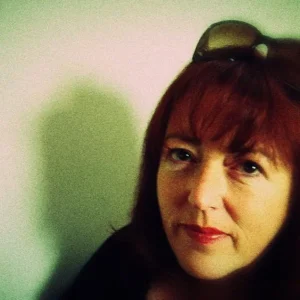
Based on the teachings of Evelynne Joffe
Kabbalist, Tarot Counsellor & Dream Therapist · Director, Institute of Esoteric Studies
This article was written by the Global Spiritual Studies editorial team, drawing on Evelynne Joffe's Kabbalah teaching for Global Spiritual Studies. Evelynne directs the Institute of Esoteric Studies in Melbourne, Australia, and has spent more than thirty years teaching students to read the Tree of Life as a practical map for self-realization. In 1992 she co-founded the Tarot Guild of Australia.
Study this with her
Living the Tree of Life · Part 1: The Ten Sephirot
Living the Tree of Life · Part 2: The Twenty-Two Paths
The Complete Tree of Life
More from Evelynne Joffe →