The Middle Pillar Exercise
Israel Regardie's classic energy practice · building and circulating five centres of light along the central pillar of the Tree of Life in your own body
The Middle Pillar exercise is a foundational energy meditation of the Western esoteric tradition, developed and popularised by Israel Regardie in The Middle Pillar (1938) and The Art of True Healing. In it you build five spheres of light · Kether, Da'ath, Tiferet, Yesod, and Malkuth · along the central pillar of the Tree of Life as it maps onto your own body, vibrating a divine name at each centre, and then circulate the awakened light through the whole system. It is a practice of balance and inner steadiness, done in about ten to twenty minutes a day.
A note on lineage, offered plainly. This is a practice of Hermetic Qabalah in the Golden Dawn and Dion Fortune lineage · the Western esoteric adaptation of Kabbalah · and it is distinct from Jewish and Rabbinic Kabbalah, which does not use this exercise. At Global Spiritual Studies we approach it, with Evelynne Joffe, as a contemplative discipline of psychological self-development rather than as religion. Regardie framed it in the language of healing and vitality; we describe that framing historically and make no medical claim of our own.
Please read before you begin. These are contemplative practices, not medical or psychological treatment. They do not cure disease, replace therapy or medication, or heal any condition. If you live with a serious mental-health condition, approach visualization work gently and with professional support · and if any imagery becomes distressing, open your eyes, feel your feet on the floor, and stop.
The Five Centres
The heart of the exercise is a column of five points of light, formed one at a time from the crown downward. Each has a body station, a Hebrew divine name that is vibrated as the centre is built, and a colour to visualize. The names below are written unpointed, as they are spoken; the translations and colours follow the standard Golden Dawn attributions, and all four colour scales are tabulated in our Liber 777 correspondences. This is the centrepiece of the whole practice.
| Centre | Body Station | Divine Name | Translation | Colour |
|---|---|---|---|---|
| Kether · the Crown | Just above the crown of the head | Eheieh (also Ehyeh / AHIH) | "I Am" · "I Am That I Am" | Brilliant, bright white |
| Da'ath · the Throat | The throat / nape of the neck · the hidden sephirah | YHVH Elohim | "the Lord God" · the divine name of Binah / knowledge | Lavender · soft pale grey (lilac-grey) |
| Tiferet · the Heart | The heart / solar-plexus centre | YHVH Eloah va-Daath | "the Lord God of Knowledge" | Gold · golden-yellow |
| Yesod · the Foundation | The genital region / loins · base of the pelvis | Shaddai El Chai | "Almighty Living God" | Violet · purple |
| Malkuth · the Kingdom | The feet / ankles · between and beneath the feet | Adonai ha-Aretz | "Lord of the Earth" | Earth colours · olive, citrine, russet, black (often a blended earthy tone) |
Note that Tiferet is here referred to the heart rather than to the solar centre it usually occupies on the full Tree · in the Middle Pillar the five points are compressed onto the body's central line, so the sphere of the Sun is felt at the heart. "Tiphareth" is the spelling used elsewhere on this site; "Tiferet" and "Tiphareth" are the same sphere.
A Word on the Colours
Sources differ on two of the five centres, and it is worth naming the difference honestly rather than pretending to a single authority. Three centres are agreed by everyone: Kether is universally brilliant white, Tiferet universally gold or yellow, and Yesod universally violet or purple. The other two vary:
Malkuth. Regardie's Middle Pillar most often has the practitioner see a single grounding earth colour at the feet. The full Golden Dawn colour scale, however, makes Malkuth the "four-coloured" sephirah · olive, citrine, russet, and black. Both are correct within their own scheme. Pick one and stay consistent from session to session rather than switching.
Da'ath. The throat centre is given as grey in some sources and as lavender in others. Either is defensible; a soft lavender-grey holds both. Da'ath is the hidden, uncounted point on the Tree, so it is fitting that its colour should be the least fixed.
How to Do the Middle Pillar, Step by Step
Stand or sit upright, spine straight, and let the breath settle before you begin. Many practitioners open with the Kabbalistic Cross to centre themselves first, then build the pillar. Work slowly · the value is in feeling each centre, not in reaching the end.
- Centre yourself. Settle the posture and the breath. If you use it, perform the Kabbalistic Cross to establish the vertical and horizontal axes of light.
- Form Kether. Bring your attention just above the crown. See a sphere of brilliant white light forming there, and vibrate Eheieh · intoning the name slowly and resonantly · until the centre feels alive.
- Bring the light down to Da'ath. Draw a shaft of light down to the throat, form a sphere of soft lavender-grey, and vibrate YHVH Elohim.
- Form Tiferet. Carry the light down to the heart. Build a golden sphere and vibrate YHVH Eloah va-Daath.
- Form Yesod. Bring the light to the loins. See a violet sphere and vibrate Shaddai El Chai.
- Form Malkuth. Let the light descend to the feet and ankles. Form an earth-coloured sphere and vibrate Adonai ha-Aretz. The five-point pillar now stands complete, crown to feet.
- Circulate the light through the two phases below · the Egg of Light and the Fountain.
- Close. Let the circulation settle back into the balanced central pillar, take a few quiet breaths, and (if you opened with it) close with the Kabbalistic Cross. Ground before you rise.
Vibration and the Two Circulation Phases
Vibrating the names
Each divine name is vibrated · intoned aloud in a slow, resonant tone you can feel humming in the body · as its centre is formed. This is the "formula of vibration." It is not a whisper and not a rushed recitation; it is a sound felt as much as heard, and it is what activates each sphere. If you cannot vibrate aloud (a shared room, a quiet hour), intone it under the breath or silently, but keep the sense of resonance.
Phase one · the Light Circulation (the Egg of Light)
Once the five centres are formed, draw the light down the left side of the body and up the right · in Regardie's version, exhaling as it descends one side and inhaling as it rises the other · then circulate it front-to-back as well. Band by band, this wraps the body in light like an egg or cocoon · sometimes called the "mummy wrappings." Coordinate it with the breath: exhale as the light goes down, inhale as it rises.
Phase two · the Fountain
Then raise the energy up the central pillar from Malkuth at the feet to Kether at the crown, and let it cascade back down the outside of the body like a fountain or a weeping willow, showering to the feet to be gathered and lifted again. Continue for several cycles. Finally, let the whole system settle back into the quiet, balanced Middle Pillar before you close.
How Long, and When to Practice
A session runs about ten to twenty minutes, done ideally every day. Beginners should start at around ten. Consistency matters more than duration · a steady ten minutes each morning does far more than an occasional hour. Morning is the common choice, since it sets the tone for the day, and many practitioners pair the exercise with the Kabbalistic Cross to open and close. Sit or stand upright with the spine straight, and let the breath be easy before you begin.
Common Mistakes
A few gentle cautions from long practice:
Rushing the vibration
The names need to be felt, not recited. If you hurry from name to name, the centres never fully wake. Slow down and let each vibration resonate before you move on.
Stopping at the crown
Skipping the circulation · building the pillar and then stopping · leaves the energy top-heavy and ungrounded. Always carry the light back down and circulate it, and always ground at the close.
Straining to "see" perfect colours
Intention and feeling matter more than vivid mental imagery. If the colours are faint or you sense rather than see them, that is entirely fine · the practice is not a test of visualization.
Forcing the breath
Do not strain to hold the breath during circulation. Keep the breathing natural and let the light follow it, not the other way round.
Practising sporadically
The benefit of the Middle Pillar is cumulative. A daily rhythm, however brief, is worth far more than intense but occasional sessions.
Where It Fits Among the Practices
The Middle Pillar rarely stands entirely alone. It pairs most naturally with the Kabbalistic Cross: do the Cross first to centre yourself and establish the vertical and horizontal axes of light, then build and circulate the five centres of the Middle Pillar, then close with the Cross again. Where the Cross draws the cross of light on the body, the Middle Pillar fills in the sephirotic spheres along its vertical shaft.
It also sits close to sephirotic meditation, but the two are distinct. The Middle Pillar builds five energy centres along the central pillar and circulates them as one system; sephirotic meditation instead dwells on a single sphere at a time · its colour, divine name, archangel, and symbol · and can move through all ten. Many students learn the Middle Pillar first, for its steadying daily rhythm, then take up sephirotic meditation to explore the spheres one by one. If you would like a printable map to hold the whole structure in view, our free Tree of Life chart and free Kabbalah Archangels chart show the spheres and their names at a glance.
Understand the Spheres You Are Building
Four of the five centres of the Middle Pillar are Sephirot (Kether, Tiferet, Yesod, Malkuth); the fifth, Da'ath, is the hidden point on the Tree that is not counted among the ten · and the practice deepens as their meaning does. In Living the Tree of Life · The Sephirot, Evelynne Joffe walks the whole Tree with you, sphere by sphere, in the measured, contemplative way this study deserves. When you're ready to move from reading to a guided course of study, you are warmly invited to explore it.
Explore the courseIf you would like to go all the way · the ten Sephirot and the twenty-two paths together · The Complete Tree of Life gathers both parts of Evelynne Joffe's journey into a single course of study.
Sources & Tradition
The Middle Pillar exercise, its five centres, the vibration of the divine names, and the two circulation phases (the Egg of Light and the Fountain) follow Israel Regardie's The Middle Pillar (1938; Chic and Sandra Tabatha Cicero's annotated edition, 2004) and The Art of True Healing, set within the wider Golden Dawn system he documents in The Golden Dawn. The colour and divine-name scales are the standard Golden Dawn attributions. This is a practice of Hermetic Qabalah in the Golden Dawn and Dion Fortune lineage · a Western esoteric tradition distinct from Jewish Kabbalah · and it is studied at Global Spiritual Studies within our courses on the Tree of Life as a contemplative discipline of self-development.
Frequently Asked Questions
What is the Middle Pillar exercise?
A Golden Dawn energy meditation, popularised by Israel Regardie, in which you build five spheres of light · Kether, Da'ath, Tiferet, Yesod, and Malkuth · along the central pillar of the Tree of Life in your body, vibrate a divine name at each, and then circulate the energy through the whole system. It is a contemplative practice of balance, usually done for ten to twenty minutes a day.
What are the divine names in the Middle Pillar?
Kether · Eheieh ("I Am"); Da'ath · YHVH Elohim ("the Lord God"); Tiferet · YHVH Eloah va-Daath ("the Lord God of Knowledge"); Yesod · Shaddai El Chai ("Almighty Living God"); Malkuth · Adonai ha-Aretz ("Lord of the Earth"). Each name is vibrated · intoned aloud and resonantly · as its centre is formed.
What colours do you visualize?
Kether brilliant white, Da'ath lavender-grey, Tiferet gold, Yesod violet, and Malkuth earth colours · olive, citrine, russet, and black, or a single grounding earth tone. Sources differ on Malkuth (a single earth colour in Regardie's version, four colours in the full Golden Dawn scale) and on Da'ath (grey or lavender). Kether, Tiferet, and Yesod are agreed by everyone.
How long should I practice the Middle Pillar?
About ten to twenty minutes, ideally daily. Beginners can start at around ten minutes. Consistency matters more than length · a steady ten minutes a day does more than an occasional hour. Morning is a common time, and many pair the exercise with the Kabbalistic Cross to open and close.
What does it mean to "vibrate" a name?
Intoning the divine name aloud in a slow, resonant tone you can feel humming in your body · not a whisper and not a rushed recitation. The vibration is what activates each centre as it forms. If you cannot vibrate aloud, intone it under the breath or silently while keeping the same sense of resonance.
Is the Middle Pillar safe, and does it heal?
It is a contemplative balancing practice, not medical or psychological treatment · it does not cure disease or replace therapy or medication. Regardie discussed it historically in the language of wellbeing and vitality, but no health claim should be drawn from that. Practise gently, keep the breath natural, ground afterward, and seek professional support if you live with a serious mental-health condition.
Continue Your Study
- The Kabbalistic Cross · the centring ritual that opens and closes the Middle Pillar
- Sephirotic Meditation · working with the ten spheres one at a time
- The Tree of Life · Complete Guide · the hub that holds all ten Sephirot and the pillars together
- Kether · the Crown · the highest centre of the pillar
- Tiferet · Beauty · the heart centre of the pillar
- Yesod · the Foundation · the fourth centre of the pillar
- Malkuth · the Kingdom · the grounding centre at the feet
- Free Tree of Life chart · a printable map of the whole structure
- Free Kabbalah Archangels chart · the divine names and archangels of the ten Sephirot
Build the pillar slowly, ground it well, and return to it daily · the Middle Pillar teaches its balance not in a single sitting but in the quiet accumulation of practice.
About this article
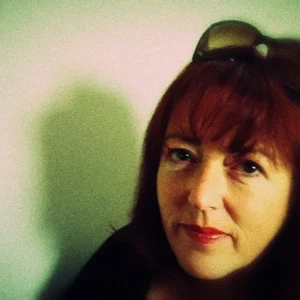
Based on the teachings of Evelynne Joffe
Kabbalist, Tarot Counsellor & Dream Therapist · Director, Institute of Esoteric Studies
This article was written by the Global Spiritual Studies editorial team, drawing on Evelynne Joffe's Kabbalah teaching for Global Spiritual Studies. Evelynne directs the Institute of Esoteric Studies in Melbourne, Australia, and has spent more than thirty years teaching students to read the Tree of Life as a practical map for self-realization. In 1992 she co-founded the Tarot Guild of Australia.
Study this with her
Living the Tree of Life · Part 1: The Ten Sephirot
Living the Tree of Life · Part 2: The Twenty-Two Paths
The Complete Tree of Life
More from Evelynne Joffe →