

The Sacred Texts of Kabbalah · The Zohar, Sefer Yetzirah, and the Bahir
The three foundational books of Kabbalah · what each one is, who tradition credits, what scholarship says, and why they still matter
Kabbalah rests on three foundational works. The Sefer Yetzirah ("Book of Formation") is the oldest and most compact · a terse cosmology of creation through numbers and Hebrew letters. The Bahir ("Book of Illumination") marks the public debut of Kabbalah's symbolic language in 12th-century Provence. The Zohar ("Book of Radiance"), which appeared in 13th-century Spain, is the tradition's crowning masterpiece · a sprawling mystical commentary on the Torah.
Read together, these three books tell the story of how a mystical tradition took shape: an abstract seed, a first flowering of symbols, and a vast, luminous canopy. This guide takes each in turn · setting the attribution that tradition offers beside the dating that modern scholarship proposes, then describing what the text contains, the ideas it gave to Kabbalah, and where an English reader can find it today. These are the same texts cited in the Sources notes across our wider study of the Tree of Life, so this page is meant as the shared explainer they all point back to.
The Three Foundations at a Glance
The three works span roughly a thousand years of development, and each is understood differently depending on whether you follow traditional attribution or modern historical scholarship. The table below sets the two side by side.
| Text | Traditional date & attribution | Scholarly date & authorship | Language | Contents | Why it matters |
|---|---|---|---|---|---|
| Sefer Yetzirah · Book of Formation | Attributed to the patriarch Abraham · some traditions to Rabbi Akiva | Debated · proposals span the 1st to 9th c. CE, with much recent scholarship favouring c. 3rd to 6th c. CE (the Talmudic period) · author unknown, likely composite | Hebrew | A terse cosmology · creation through the "32 paths of wisdom" (10 sefirot and 22 Hebrew letters), grouped as 3 mothers, 7 doubles, and 12 simples | The seedbed of the sefirot and of the mystical potency of the Hebrew letters · the foundation for all later Kabbalah |
| Bahir · Book of Illumination | Attributed to the 1st-c. sage Nehunya ben HaKanah | Appeared in Provence, c. 1176 · anonymous and pseudepigraphic · some scholars date the composition to the late 12th / early 13th c. among medieval esotericists | Hebrew, with Aramaic | Short, fragmentary midrashic aphorisms · the earliest full treatment of the sefirot as divine powers, with the first "tree" imagery | Marks the literary debut of Kabbalah · the first to present the sefirot as a living symbolic system |
| Zohar · Book of Radiance | Attributed to the 2nd-c. sage Rabbi Shimon bar Yochai ("Rashbi") | Composed primarily by Moses de León (c. 1240 to 1305) in 13th-c. Castile, Spain (Gershom Scholem, Major Trends, 1941) · near-unanimous modern consensus | Aramaic (an artificial, archaizing Aramaic) | Twenty-plus sections · a mystical commentary on the Torah (Genesis to Deuteronomy), including the Idra Rabba, Idra Zuta, and Sifra di-Tzeniuta | The central and most influential text of Kabbalah · it shaped all later Jewish mysticism |
"Traditional" attributions are those the tradition itself hands down · often to an ancient sage as an honour rather than a claim of literal authorship. "Scholarly" dating reflects modern historical and philological study. Where scholarship is genuinely divided, both positions are given.
Sefer Yetzirah · The Book of Formation
The Sefer Yetzirah, the "Book of Formation" (or Creation), is the oldest and most enigmatic of the three · a work so compact it can be read in a single sitting, yet dense enough that commentators have unfolded it for a thousand years.
Tradition and scholarship
Tradition attributes the book to the patriarch Abraham · some strands credit Rabbi Akiva, and a few reach all the way back to Adam. Modern scholarship reads these as honorific rather than literal. Its actual date is genuinely contested: proposals range across the 1st to the 9th century CE, with much recent scholarship favouring roughly the 3rd to 6th century, the Talmudic period. The author is unknown, and the text is likely composite · it survives in three main recensions, the Short, the Long, and the Saadyan (named for Saadia Gaon's commentary).
What it contains
The Sefer Yetzirah is extraordinarily terse. It describes the creation of the cosmos through the "32 paths of wisdom" · the 10 sefirot (here the ten primordial numbers or depths of reality) together with the 22 letters of the Hebrew alphabet. The letters are sorted into three mothers (Aleph, Mem, Shin · air, water, fire), seven doubles (the classical planets), and twelve simples (the signs of the zodiac). This is the very scheme that underlies our own Hebrew letter and path attributions.
Its core idea, and its legacy
The book's central vision is that God forms the world by combining letters and numbers · that language and mathematics are the instruments of creation. Here, for the first time, the sefirot appear as the ten dimensions or directions of reality, and the Hebrew letters carry a creative charge. That double inheritance · the sefirot and the living letters · makes the Sefer Yetzirah the earliest source for two ideas that run through every later system, both Jewish Kabbalah and Hermetic Qabalah alike. The standard modern English edition is Aryeh Kaplan's Sefer Yetzirah: The Book of Creation in Theory and Practice (1990, revised 1997), which presents all the major recensions with extensive commentary.
The Bahir · The Book of Illumination
If the Sefer Yetzirah is the abstract seed, the Bahir · Sefer HaBahir, the "Book of Illumination" · is the first flowering. It is where the dry scaffolding of numbers and letters becomes a living symbolic language, and it is widely regarded as the literary debut of Kabbalah proper.
Tradition and scholarship
Tradition attributes the Bahir to the 1st-century sage Nehunya ben HaKanah · the text opens by quoting him, which is why it is sometimes called the Bahir of Rabbi Nehunya. Historically, the book appeared in Provence around 1176 and is anonymous and pseudepigraphic. Here scholarship divides in a way worth naming plainly: some place its appearance firmly at 1176 in southern France, while others date the composition itself to the late 12th or early 13th century, among circles of medieval esotericists. The figure of Isaac the Blind was active as the Bahir surfaced and was linked to it in some circles · though recent scholarship complicates any simple attribution and suggests he may not have known the text directly. What is not in dispute is the book's significance: its emergence is treated as the moment Kabbalah enters the historical record as a written tradition.
What it contains
The Bahir is short, fragmentary, and famously difficult · a string of midrashic-style aphorisms and parables, many of them obscure. The name means "bright" or "illuminating," a title some read with a touch of irony given the text's opacity. It rewards patience rather than a first reading.
Its core idea, and its legacy
The Bahir's contribution is decisive: it offers the first symbolic presentation of the sefirot as divine powers or vessels, rather than as bare numbers, and it introduces the early "tree" and cosmic imagery that would grow into the mature Tree of Life. It is the bridge between the abstraction of the Sefer Yetzirah and the vast symbolism of the Zohar · the point where the sefirot become a living system of meaning. The standard English edition is Aryeh Kaplan's The Bahir: Illumination (1979).
The Zohar · The Book of Radiance
The Zohar · the "Book of Radiance" or "Splendour" · is the masterpiece toward which the other two texts lead. It is the central and most authoritative book of Kabbalah, and for centuries it was revered in some Jewish communities as scripture second only to the Torah and Talmud.
Tradition and scholarship
Tradition attributes the Zohar to Rabbi Shimon bar Yochai (Rashbi), the 2nd-century Galilean sage who, by legend, received its teachings while hiding from Roman persecution in a cave for thirteen years. The scholarly account is different. The Zohar first appeared in late-13th-century Spain, brought to light by Moses de León, who ascribed it to Rashbi. In his landmark study Major Trends in Jewish Mysticism (1941), Gershom Scholem argued that de León was in fact its primary author, and modern critical scholarship has reached a near-unanimous consensus for 13th-century Castile.
Scholem's evidence, in brief. The Zohar's Aramaic is an artificial, archaizing construction · it mimics ancient styles but is laced with medieval Hebrew, Arabic, and Spanish turns of phrase, along with grammatical errors uncharacteristic of classical Aramaic. The text also refers to Spanish locales and to medieval events. Tradition and scholarship need not be treated as enemies here · many readers hold the historical account and the traditional reverence side by side.
What it contains
The Zohar is not a single book but a library · more than twenty sections, the bulk of it a mystical commentary running across the Torah from Genesis to Deuteronomy. Among its named sub-sections are the Idra Rabba ("Greater Assembly," in which Rashbi and his companions expound the divine countenance), the Idra Zuta ("Lesser Assembly," recounting Rashbi's death), and the Sifra di-Tzeniuta ("Book of Concealment"), among the most cryptic texts in all of Jewish literature. Later strata, such as the Raya Mehemna and the Tikkunei Zohar, were added by other hands.
Its core idea, and its legacy
At the heart of the Zohar is a dynamic vision of the divine: the ten sefirot as living emanations of the hidden Ein Sof (the Infinite), the union of masculine and feminine within God (Tiferet and the Shekhinah), and the Torah as a living body of divine secrets awaiting the reader who can uncover them. This vision became the foundation of everything that followed · Moses Cordovero's systematisation in the 16th century and Isaac Luria's cosmology after him both build directly on it. In English, the landmark scholarly translation is Daniel C. Matt's The Zohar: Pritzker Edition (Stanford University Press), a multi-volume edition completed in 2017 · Matt translated the bulk of the set, which was carried to completion by Joel Hecker and Nathan Wolski. An earlier complete English rendering, the Soncino Zohar of Sperling and Simon, appeared in the 1930s.
Study the Tree These Texts Describe
The sefirot that the Bahir first named and the Zohar brought to life are the map at the centre of our teaching. Living the Tree of Life · The Ten Sephirot walks that map slowly, with a living teacher, in the measured and contemplative way the subject deserves. You are warmly invited to explore it.
Explore the coursesHow the Three Fit Together
Set end to end, the three texts trace a single arc. The Sefer Yetzirah gives Kabbalah its raw materials · ten sefirot and twenty-two letters, the alphabet of creation. The Bahir takes those materials and, for the first time, makes them symbols · the sefirot become divine powers arranged as a living tree. The Zohar then unfolds that symbolism into a vast contemplative commentary on the whole Torah. Abstraction, symbol, and full flowering · seed, sprout, and canopy. Each later text assumes the one before it, which is why they are studied together and cited together, and why nearly every idea in the developed Tree of Life can be traced back through this lineage of books.
Sources & Tradition
The account of the Zohar's authorship follows Gershom Scholem, Major Trends in Jewish Mysticism (1941) and Kabbalah, whose attribution to Moses de León remains the near-unanimous scholarly consensus. The datings and descriptions of the Sefer Yetzirah and the Bahir draw on Scholem, on Moshe Idel's Kabbalah: New Perspectives (1988), and on standard reference sources including My Jewish Learning and Encyclopedia.com; the note on Isaac the Blind and the Bahir reflects recent scholarship in the Jewish Quarterly Review (2021). The standard English translations cited are Daniel C. Matt's The Zohar: Pritzker Edition (Stanford University Press, completed 2017) and Aryeh Kaplan's editions of the Sefer Yetzirah (1990) and The Bahir (1979). Global Spiritual Studies teaches Hermetic Qabalah in the Golden Dawn and Dion Fortune lineage · we hold the Jewish tradition that gave the world these texts with respect, and we point readers who seek Jewish Kabbalah toward Jewish teachers and communities.
Frequently Asked Questions
What are the main sacred texts of Kabbalah?
Three works form the core: the Sefer Yetzirah (Book of Formation), the Bahir (Book of Illumination), and the Zohar (Book of Radiance). The Sefer Yetzirah is the oldest and most abstract, the Bahir marks Kabbalah's public debut, and the Zohar is its vast, central masterpiece.
Who wrote the Zohar?
Tradition attributes it to the 2nd-century sage Rabbi Shimon bar Yochai. Modern scholarship, following Gershom Scholem, attributes it primarily to Moses de León in 13th-century Spain, based on its language and historical references.
How old is the Sefer Yetzirah?
Its date is debated. Scholarly proposals range from the 1st to the 9th century CE, with many favouring roughly the 3rd to 6th century. Tradition attributes it to the patriarch Abraham, an attribution most scholars read as honorific rather than literal.
What is the Bahir?
The Bahir, or Sefer HaBahir, is a short, fragmentary mystical text that appeared in Provence around 1176. It is traditionally attributed to the sage Nehunya ben HaKanah and is widely seen as the first Kabbalistic book, offering the earliest symbolic treatment of the sefirot.
Where can I read these texts in English?
Daniel C. Matt's The Zohar: Pritzker Edition (Stanford, completed 2017) is the landmark scholarly Zohar in English. Aryeh Kaplan's translations of the Sefer Yetzirah (1990) and The Bahir (1979) are the standard English editions of those works.
Is the Torah a Kabbalistic text?
The Torah is the shared scripture of Judaism, not a Kabbalistic book in itself. Kabbalah is a mystical way of reading the Torah · texts like the Zohar are commentaries that uncover what Kabbalists regard as its hidden inner meaning.
Continue Your Study
- The Tree of Life · Complete Guide · the hub that draws the sefirot of these texts into one map
- The 22 Hebrew Letters · the alphabet of creation the Sefer Yetzirah describes
- The 22 Paths & Their Tarot Correspondences · the letters as paths on the Tree
- Kabbalah vs Qabalah vs Cabala · three spellings, three traditions, one root
- Gematria Explained · reading meaning from the numerical values of Hebrew letters
- The Qliphoth · the Shadow Tree · the husks of Lurianic cosmology, understood soberly
- Learn Kabbalah Online · our courses on the Tree of Life
Seed, sprout, and canopy · the Sefer Yetzirah, the Bahir, and the Zohar are one tradition learning to speak. Read in order, they show Kabbalah becoming itself.
About this article
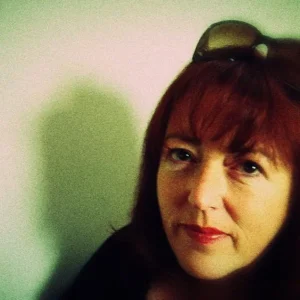
Based on the teachings of Evelynne Joffe
Kabbalist, Tarot Counsellor & Dream Therapist · Director, Institute of Esoteric Studies
This article was written by the Global Spiritual Studies editorial team, drawing on Evelynne Joffe's Kabbalah teaching for Global Spiritual Studies. Evelynne directs the Institute of Esoteric Studies in Melbourne, Australia, and has spent more than thirty years teaching students to read the Tree of Life as a practical map for self-realization. In 1992 she co-founded the Tarot Guild of Australia.
Study this with her
Living the Tree of Life · Part 1: The Ten Sephirot
Living the Tree of Life · Part 2: The Twenty-Two Paths
The Complete Tree of Life
More from Evelynne Joffe →