
Kabbalah vs Qabalah vs Cabala · Three Spellings, Three Traditions
One Hebrew word, three streams · how the K, Q, and C spellings came to mark the Jewish, Hermetic, and Christian paths
The three spellings mark three distinct traditions that share a common root: the Hebrew word קבלה (qabbalah), meaning "receiving" or "that which is received." Kabbalah (K) names the Jewish mystical tradition · Cabala (C) names its Renaissance Christian adaptation · Qabalah (Q) names the Western Hermetic and occult system. The spellings diverged deliberately so readers could tell the three apart.
If you have ever wondered why the same subject appears as Kabbalah on one book, Qabalah on another, and Cabala on a third, you have met one of the tidiest signposts in Western esotericism. The variation is not sloppiness. Over the centuries the orthography became a kind of shorthand · a way for an author to tell you, before the first sentence, which of three related traditions they mean to teach.
One Root, Three Streams
All three words transliterate a single Hebrew term, קבלה, built on the root meaning "to receive." Kabbalah is, at heart, a received teaching · wisdom passed from teacher to student, mouth to ear, across generations. That idea of transmission is why the word matters more than any one spelling of it.
From that single root, three streams flowed. The first stayed within Judaism and became the Jewish mystical tradition. The second was carried into Christian theology during the Renaissance. The third was reshaped by Western occultists into a system of magic, psychology, and symbol. They share vocabulary · sephirot, the Tree of Life, the Hebrew letters · but they differ in aim, in setting, and, conveniently, in how their name is spelled.
The Three Spellings at a Glance
The table below is the fastest way to hold the distinction in view. Each spelling anchors a tradition, an era, a set of key figures, and a body of texts. Read across the row for the shape of each stream.
| Spelling | Tradition | Era / origin | Key figures | Key texts | Focus |
|---|---|---|---|---|---|
| KKabbalah | Jewish mysticism | Medieval · crystallized 12th to 13th c. Provence and Spain (roots traced to antiquity) | Moses de León · Isaac the Blind · Moses Cordovero · Isaac Luria (the Ari) | Zohar · Sefer Yetzirah · Bahir | Torah exegesis · the sephirot as divine emanations · union with God (devekut) · tikkun |
| CCabala | Christian Cabala | Renaissance · late 15th to 16th c. Italy and Germany | Giovanni Pico della Mirandola · Johannes Reuchlin (De Arte Cabalistica, 1517) · Athanasius Kircher | Adapted Kabbalistic texts read through Christian theology | Correlating the sephirot with Christian doctrine · apologetics |
| QQabalah | Hermetic / Western occult | Late 19th c. onward | Hermetic Order of the Golden Dawn · S.L. MacGregor Mathers · Dion Fortune · Aleister Crowley · Israel Regardie | The Mystical Qabalah (Dion Fortune, 1935) · 777 (Crowley) · The Golden Dawn (Regardie) | Tarot, astrology, ceremonial magic, psychology · pathworking on the Tree of Life |
Rule of thumb · K = Jewish · C = Christian · Q = Hermetic / occult. These are widely used conventions, not hard rules · authors vary · but they are the shorthand most writers follow.
Why the Spellings Diverged
Two forces pulled the one word into three spellings.
Transliteration · a sound with no exact Latin letter
The Hebrew קבלה begins with the letter qof (ק), a guttural for which English has no one-to-one equivalent. Over the years it has been rendered Cabala, Kabbalah, Qabalah, Kabala, Cabbala, and more. "Q" represents qof most literally; "K" and "C" reflect softer, more anglicized conventions. None is a mistake · each is a reasonable attempt to spell a sound that Latin letters were never designed to carry.
Deliberate differentiation · spelling as a signal
The second force was intentional. "Cabala" (also "Cabbala") entered English during the Renaissance to denote the Christianized reading of Kabbalistic texts. Later, from the late 19th century onward, "Qabalah" (Q) became the preferred spelling within Western occultism and Hermeticism. Golden Dawn-era occultists adopted the Q deliberately, to mark their syncretic magical system · woven together from the Tree of Life, the Tarot, astrology, and ceremonial magic · as distinct from both its Jewish and its Christian predecessors. The orthography did quiet, useful work: it told a reader which tradition a book belonged to before they had read a word of it.
Jewish Kabbalah in Brief
Jewish Kabbalah is the mystical and esoteric dimension of Judaism, read alongside Torah rather than instead of it. Its foundational texts · the Zohar, the Sefer Yetzirah, and the Bahir · arose within Jewish life, and its central image, the sephirot, describes the ten emanations through which the hidden Infinite (Ein Sof) becomes manifest. It crystallized in medieval Provence and Spain and was later systematized by figures such as Moses Cordovero and Isaac Luria. Its aims are Torah-centered: contemplation of the divine, union with God (devekut), and the repair of the world (tikkun). This is the tradition the word "Kabbalah," spelled with a K, most often names. For the fuller question of who the tradition belongs to, see Is Kabbalah Jewish?
Christian Cabala in Brief
During the Renaissance, Christian scholars grew fascinated by Kabbalah and set about reading its symbols through the lens of their own theology. Giovanni Pico della Mirandola argued that Kabbalistic teaching confirmed Christian doctrine, and Johannes Reuchlin gave the movement its first systematic treatments in works such as De Arte Cabalistica (1517). This Christian Cabala · usually spelled with a C · correlated the sephirot with Christian ideas and used Kabbalistic method for apologetics. It was an adaptation from outside Judaism, and the C-spelling came to mark that distinct Renaissance lineage.
Hermetic Qabalah in Brief
The third stream is the one most Western seekers meet today. From the late 19th century, the Hermetic Order of the Golden Dawn synthesized the Tree of Life with the Tarot, astrology, and ceremonial magic, building a Qabalah open to any initiate. Dion Fortune's The Mystical Qabalah (1935) gave the system its most influential modern statement, presenting the Tree as a map of the psyche and the spiritual path. This Hermetic Qabalah · spelled with a Q · treats the Tree of Life as a universal framework for contemplation, symbol, and inner work rather than as Torah commentary.
Where Global Spiritual Studies stands. The tradition we teach is Hermetic Qabalah in the Golden Dawn and Dion Fortune lineage, through our instructor Evelynne Joffe. We work primarily within the Western Qabalah, using the Tree of Life as a map for Tarot, psychology, and contemplation. We do not teach, and do not claim to speak for, Jewish Kabbalah · we hold that tradition with respect and point readers who want it toward Jewish teachers. This is why you will usually see us spell it "Qabalah," with a Q, when we describe our own courses.
Which One Should You Study?
There is no single "correct" tradition any more than there is a single correct spelling · the right one depends on what you are looking for. If you are drawn to Kabbalah as the inner dimension of Torah and Jewish practice, the path leads toward Jewish teachers and communities. If you are drawn to the Tree of Life as a map for the Tarot, self-knowledge, and Western contemplative practice, that is the Hermetic Qabalah · the stream this school teaches. A gentle way to begin is simply to sit with the structure itself. Our complete guide to the Tree of Life lays out the ten sephirot and the paths that join them, and the free Tree of Life chart gives you a printable map to keep beside you. When you are ready to study with a living teacher, you are warmly invited to explore our Kabbalah courses.
Sources & Tradition
The distinction between the three spellings and their traditions follows standard scholarship on Jewish, Christian, and Hermetic Kabbalah. Jewish Kabbalah and its texts are treated in Gershom Scholem's Kabbalah and Major Trends in Jewish Mysticism (1941). Christian Cabala is documented in the work of Pico della Mirandola and Johannes Reuchlin, De Arte Cabalistica (1517). The Hermetic Qabalah taught at Global Spiritual Studies follows Dion Fortune's The Mystical Qabalah (1935) and the Golden Dawn corpus as set out in Israel Regardie's The Golden Dawn. We teach the Western Qabalah in that lineage and do not represent Jewish Kabbalah.
Frequently Asked Questions
Is there a difference between Kabbalah and Qabalah?
Yes. "Kabbalah" (K) usually names the Jewish mystical tradition rooted in Torah and texts like the Zohar. "Qabalah" (Q) usually names the Western Hermetic system developed from the late 19th century by the Golden Dawn and writers such as Dion Fortune, which weaves in Tarot, astrology, and psychology. The spellings signal which tradition an author means.
Why is Qabalah spelled with a Q?
The Hebrew word begins with the letter qof (ק), which "Q" represents more literally than "K." Golden Dawn-era occultists adopted the Q-spelling deliberately to mark their syncretic system as distinct from Jewish Kabbalah and Christian Cabala.
What is Cabala with a C?
"Cabala" (also "Cabbala") most often refers to Christian Cabala · the Renaissance adaptation of Jewish Kabbalah by scholars such as Pico della Mirandola and Johannes Reuchlin, who read the sephirot through Christian theology.
Are the three traditions in conflict?
They share a root and much vocabulary but differ in aim and setting. Jewish Kabbalah lives within Judaism and Torah study; Christian Cabala reads Kabbalah through Christian doctrine; Hermetic Qabalah is a magical and psychological system open to practitioners of any background.
Which spelling does Global Spiritual Studies use?
Global Spiritual Studies teaches Hermetic Qabalah in the Golden Dawn and Dion Fortune lineage, so it generally uses "Qabalah" (Q) when describing its own courses, while using "Kabbalah" (K) when referring to the Jewish tradition.
Is one spelling more correct than the others?
No single spelling is "correct" · all are transliterations of one Hebrew word. What matters is matching the spelling to the tradition you mean.
Continue Your Study
- The Tree of Life · Complete Guide · the ten sephirot and the paths that join them
- Is Kabbalah Jewish? · the traditional and universalist views, fairly presented
- The Sacred Texts of Kabbalah · the Zohar, Sefer Yetzirah, and Bahir
- The Hebrew Letters · the 22 letters, their meanings, and gematria values
- The Paths & Tarot Correspondences · the 22 paths and their Tarot cards
- Free Tree of Life chart · a printable map of the whole structure
- Explore our Kabbalah courses · Hermetic Qabalah with a living teacher
One word, received and handed on · spelled three ways so that each tradition can be known for what it is.
About this article
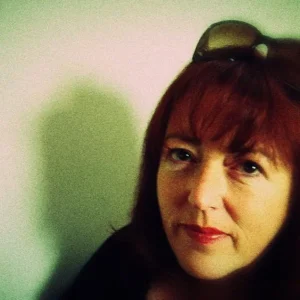
Based on the teachings of Evelynne Joffe
Kabbalist, Tarot Counsellor & Dream Therapist · Director, Institute of Esoteric Studies
This article was written by the Global Spiritual Studies editorial team, drawing on Evelynne Joffe's Kabbalah teaching for Global Spiritual Studies. Evelynne directs the Institute of Esoteric Studies in Melbourne, Australia, and has spent more than thirty years teaching students to read the Tree of Life as a practical map for self-realization. In 1992 she co-founded the Tarot Guild of Australia.
Study this with her
Living the Tree of Life · Part 1: The Ten Sephirot
Living the Tree of Life · Part 2: The Twenty-Two Paths
The Complete Tree of Life
More from Evelynne Joffe →