
Kabbalah for Beginners: Where to Start
A clear roadmap · what Kabbalah is, the Tree of Life as its map, the ten Sephirot and twenty-two paths, the free charts to begin with, and a first thirty days of study
Kabbalah is a mystical framework for understanding the divine, the cosmos, and the self, using a single diagram · the Tree of Life · as its central map. If you are starting from scratch, the way in is simpler than the diagram makes it look: learn the shape of the Tree, meet the ten Sephirot one at a time, add the twenty-two paths, and begin one small daily practice. This guide gives you that roadmap, a set of free charts to begin with, and a staged plan for your first thirty days.
One honest note before we begin, because it shapes everything that follows. There are two great streams that both carry the name. Traditional Jewish Kabbalah is rooted in the Torah and in texts such as the Zohar and the Sefer Yetzirah, studied within a living religious tradition. Hermetic Qabalah is the Western esoteric adaptation of that map, carried through the Hermetic Order of the Golden Dawn and the writer Dion Fortune. Global Spiritual Studies teaches the Hermetic Qabalah, in the Golden Dawn and Dion Fortune lineage, and · with our teacher Evelynne Joffe · approaches it as psychological self-development, not religion. We point honestly to the Jewish roots throughout, and recommend Jewish sources when you want them, but what you learn here is the Western contemplative tradition.
What Kabbalah Actually Is
At its simplest, Kabbalah is a map of reality and of the human being · a way of picturing how the one divine source unfolds into the whole of creation, and how the human soul can trace that same path back toward its origin. The map is the Tree of Life: ten spheres (the Sephirot) joined by twenty-two paths. Each sphere names a quality of being · will, wisdom, understanding, mercy, severity, beauty, and so on down to the physical world · and the paths are the routes of movement and relationship between them.
In the Hermetic Qabalah taught here, the Tree is read as a psychological and spiritual model rather than a religious doctrine. It becomes a mirror of the psyche: a way to see which qualities in yourself are strong, which are neglected, and how to bring them into balance. Evelynne Joffe describes this as "a way of personal development and self-realization," deliberately distanced from both Orthodox Jewish practice and celebrity-fashion Kabbalah. You do not need to hold any particular belief to begin · only a willingness to work with the map contemplatively.
The Tree of Life · Your Map
Everything in Kabbalah hangs on the Tree of Life, so this is the first thing to learn. Picture ten circles arranged in a particular pattern and joined by twenty-two lines. The ten circles are the Sephirot; the twenty-two lines are the paths. The circles are further organised into three pillars · a right-hand Pillar of Mercy (force, expansion), a left-hand Pillar of Severity (form, restraint), and a central Pillar of Equilibrium that reconciles them. Creation is said to descend the Tree from the crown to the base in a zig-zag called the Lightning Flash, and the seeker climbs back up the same structure.
You do not have to memorise all of this at once. The single most useful first step is simply to look at the diagram often enough that its shape becomes familiar · which spheres sit where, and which pillar each belongs to. Our complete Tree of Life guide walks the whole structure, and the free Tree of Life chart is a printable map you can keep beside you as you read.
The Ten Sephirot
The ten Sephirot are the spheres of the Tree · ten qualities or stages through which the divine light descends into the world. The traditional way for a beginner to meet them is from the bottom up: start at Malkuth, the physical world you already stand in, and climb toward the crown. Ground first, then ascend. Here is each sphere in a single line.
- Kether · the Crown · pure being and unity; the divine spark, the source above all the rest.
- Chokmah · Wisdom · the first outpouring of force, the dynamic flash of pure energy.
- Binah · Understanding · the great mother; the force given form, structure, and comprehension.
- Chesed · Mercy · loving-kindness, generosity, expansion, the impulse to give.
- Geburah · Severity (also Gevurah) · strength, discernment, judgement, and healthy boundaries.
- Tiferet · Beauty (Tiphareth) · the harmonised heart and centre; the Self, balance, the reconciling Sun.
- Netzach · Victory · feeling, desire, creativity, and the drive of nature.
- Hod · Splendour · intellect, language, communication, and the ordering mind.
- Yesod · Foundation · the unconscious, imagination, dreams, and the astral · the Moon.
- Malkuth · Kingdom · the physical world, the body, the present moment · where you begin.
A single point on the central pillar, Da'ath (Knowledge), is often marked between the highest three spheres and the rest, but it is never counted among the ten. For now, simply note that it is there and keep it lightly held.
The Twenty-Two Paths
If the ten Sephirot are the rooms, the twenty-two paths are the corridors between them. Each path corresponds to one of the twenty-two letters of the Hebrew alphabet and, in the Western tradition, to one of the twenty-two Major Arcana of the Tarot. So the Fool belongs to the path of Aleph, the Magician to Beth, the World to Tav, and so on across the whole Tree. This is the great meeting-point of Kabbalah and Tarot: the Major Arcana become a set of doorways onto the paths, and the Tree gives the cards a coherent map to live on.
You do not need the paths on day one · they come after you know the ten spheres. When you are ready, our guide to the twenty-two paths and their Tarot correspondences lays out every letter and card, the free 22 paths chart gives you the whole set at a glance, and the Hebrew letters and their meanings reference explains the alphabet the paths are built on.
Start Free · The Charts and Guides
You can go a long way before you spend anything. Everything you need to learn the map is available free on this site, and the best way to begin is to print the charts and keep them where you study.
Free Resources to Begin With
- The Tree of Life · Complete Guide · the hub that holds the whole map together
- Free Tree of Life chart · a printable map of the ten Sephirot, three pillars, and paths
- Free 22 paths chart · every path with its Hebrew letter and Tarot card
- Free Kabbalah archangels chart · the divine names and archangels of each sphere
- Hebrew letters and their meanings · the twenty-two letters behind the paths
- Tree of Life PDF · Path Notes & Study Guide · a printable companion for deeper study
From Reading to Doing · The Practices
Once you know the map, you can begin to work it. The Western tradition offers a handful of gentle contemplative practices that turn the diagram into lived experience. These four are the natural first ones, and each has its own beginner's guide here.
- The Kabbalistic Cross · a short centring ritual in which you trace a cross of light on your own body, placing the crown, the kingdom, and the two pillars around you. The simplest place to start.
- The Middle Pillar exercise · Israel Regardie's classic energy practice, building five spheres of light along the central pillar of the Tree within you.
- Sephirotic meditation · dwelling on one sphere at a time, using its colour, name, and symbol as seeds to attune to that quality of consciousness.
- Pathworking · guided inner journeys along the paths, entering each one through its Tarot card as a doorway. A practice to grow into once the map is familiar.
A gentle note. These are contemplative practices in the Western esoteric tradition, not medical or psychological treatment. They are not designed to heal disease, cure anxiety, or replace therapy or medication. If you live with a serious mental-health condition, approach visualisation work gently and with professional support.
Your First Thirty Days
Here is a simple, unhurried plan for a first month. Each week builds on the last, moving from the shape of the Tree to your first daily practice. Adjust the pace to your own life · consistency matters far more than speed.
| Week | Focus | Do this |
|---|---|---|
| Week 1 · The map | Learn the shape of the Tree | Read the hub guide; print the free Tree of Life chart; practise drawing the Tree from memory · the ten spheres, three pillars, and twenty-two paths. |
| Week 2 · The ten Sephirot | Meet the spheres | Read one sephirah a day, bottom-up (Malkuth to Kether). Note each sphere's title, planet, and colour. Try a first short sephirotic meditation on Malkuth. |
| Week 3 · The paths and Tarot | Connect letters, cards, paths | Read the paths guide; pair each Hebrew letter with its Tarot card. If you know Tarot, lay the twenty-two Majors on the Tree. |
| Week 4 · Begin a practice | Move from reading to doing | Learn the Kabbalistic Cross (a few minutes daily to centre), then add the Middle Pillar. Start a practice journal. Consider a guided course to go deeper. |
A Beginner's Reading List
A few well-chosen books will carry you further than a shelf of scattered ones. These are the standard, trustworthy starting points · the first is the one most often recommended above all others.
- Dion Fortune · The Mystical Qabalah (1935) · the foundational Hermetic Qabalah text, presenting the Tree as both psychology and cosmology. The single most-recommended book to start with.
- Israel Regardie · The Middle Pillar and The Tree of Life · practical Golden Dawn energy work and a clear account of the structure.
- Z'ev ben Shimon Halevi (Warren Kenton) · The Kabbalah: Tradition of Hidden Knowledge · a clear, strongly visual beginner's guide (a favourite of Evelynne Joffe's for its diagrams).
- Aryeh Kaplan · for the Jewish sources · his translations of the Sefer Yetzirah and the Bahir, and Meditation and Kabbalah, which point you honestly to the Jewish textual roots.
- Optional, for later · Gareth Knight · A Practical Guide to Qabalistic Symbolism, and Dolores Ashcroft-Nowicki · The Shining Paths (for when you reach pathworking).
Study the Tree of Life with a Living Teacher
When you are ready to move from reading to a guided course of study, Evelynne Joffe walks the whole Tree of Life with you · beginning, as this guide does, at the bottom and climbing the ten Sephirot one at a time, in the measured, psychological way the map deserves. Living the Tree of Life · The Sephirot is the place to start.
Explore Living the Tree of LifeReady to go all the way · the Sephirot and the twenty-two paths together? Explore The Complete Tree of Life.
Evelynne Joffe is Director of the Institute of Esoteric Studies in Melbourne, a founding member and past President of the Tarot Guild of Australia, and has taught Kabbalah since the early 1990s. Her courses are recorded webinar classes you can work through at your own pace · the Sephirot course climbs the Tree bottom-to-top through all ten spheres, and the Paths course walks each of the twenty-two paths with its Hebrew letter, Tarot card, and myth.
Sources & Tradition
This roadmap follows the Western esoteric (Hermetic Qabalah) tradition as set out in Dion Fortune's The Mystical Qabalah (1935) and Israel Regardie's Golden Dawn writings, including The Middle Pillar and The Tree of Life. Z'ev ben Shimon Halevi's The Kabbalah: Tradition of Hidden Knowledge is cited as a visual beginner's guide. For the Jewish textual roots we point to Aryeh Kaplan's translations of the Sefer Yetzirah and the Bahir and his Meditation and Kabbalah. The teaching approach · Kabbalah as psychological self-development rather than religion · follows the course material of Evelynne Joffe, Living the Tree of Life, taught at Global Spiritual Studies. Hermetic Qabalah is distinct from Jewish Kabbalah, and we distinguish the two throughout.
Frequently Asked Questions
Is Kabbalah hard for beginners?
No · it looks complex because of the diagram and the Hebrew, but you can learn the basic shape of the Tree of Life in about a week. Start with the map and the ten spheres, add the paths later, and begin one small daily practice. The structure is simpler than it first appears; the depth is what unfolds over years.
What is the difference between Kabbalah and Qabalah?
The spelling usually signals the lineage. "Kabbalah" most often means the Jewish tradition, rooted in the Torah, the Zohar, and the Sefer Yetzirah. "Qabalah" usually means the Hermetic or Western esoteric stream carried through the Golden Dawn and Dion Fortune. Global Spiritual Studies teaches the Hermetic Qabalah as psychological self-development, while pointing honestly to the Jewish roots.
Do I need to be Jewish to study Kabbalah?
Not for the Hermetic Qabalah taught here · it is an open contemplative system that welcomes any sincere student. If you are drawn instead to the Jewish devotional tradition, seek a Jewish teacher and the primary texts; Aryeh Kaplan's translations are a good door into the Jewish sources.
What should I read first?
Begin with Dion Fortune's The Mystical Qabalah for the overall framework. Read a clear visual guide such as Z'ev ben Shimon Halevi's The Kabbalah: Tradition of Hidden Knowledge alongside it, and turn to Aryeh Kaplan when you want the Jewish sources. Israel Regardie's The Middle Pillar is the natural next step once you want to practise.
Where do I actually start on the Tree of Life?
At the bottom · Malkuth, the sphere of the physical world · and climb upward from there, one sphere at a time. Ground first, then ascend. This "start at the bottom and rise" approach is the traditional beginner's path, and it is how a guided course such as Living the Tree of Life is structured too.
How long does it take to learn Kabbalah?
You can grasp the basics · the shape of the Tree, the ten spheres, the idea of the paths · within a month. The depth, however, is a lifelong study. Evelynne Joffe calls the Tree of Life "far more than a lifetime study," and most practitioners find it a companion they return to for years rather than a subject they finish.
Continue Your Study
- The Tree of Life · Complete Guide · the hub that holds the whole map together
- The 22 Paths & Tarot Correspondences · every path with its Hebrew letter and card
- Kabbalah and Tarot · the Connection · how the two traditions meet on the Tree
- Malkuth · the Kingdom · the sphere of the physical world, where beginners start
- The Kabbalistic Cross · the simplest first practice
- The Middle Pillar Exercise · Regardie's classic energy practice
- Free Tree of Life chart · a printable map to keep beside you
Start at the bottom, learn the map, and take one small step each day. The Tree of Life will meet you exactly where you stand.
About this article
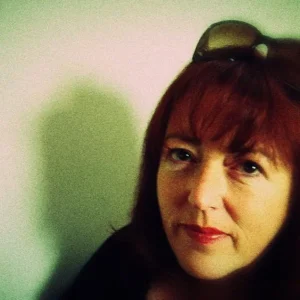
Based on the teachings of Evelynne Joffe
Kabbalist, Tarot Counsellor & Dream Therapist · Director, Institute of Esoteric Studies
This article was written by the Global Spiritual Studies editorial team, drawing on Evelynne Joffe's Kabbalah teaching for Global Spiritual Studies. Evelynne directs the Institute of Esoteric Studies in Melbourne, Australia, and has spent more than thirty years teaching students to read the Tree of Life as a practical map for self-realization. In 1992 she co-founded the Tarot Guild of Australia.
Study this with her
Living the Tree of Life · Part 1: The Ten Sephirot
Living the Tree of Life · Part 2: The Twenty-Two Paths
The Complete Tree of Life
More from Evelynne Joffe →